


If you are thinking about repainting the outside of your home, you have probably already asked the big question: how much is this going to cost? The answer is not a simple number — and if anyone gives you one without looking at your specific home, that is a red flag.
The cost to paint a house in Jacksonville depends on a lot of things: how big your home is, what the outside is made of, how much prep work needs to happen before anyone picks up a brush, and what kind of paint you choose. In this guide, we are going to break all of that down in plain language so you know exactly what to expect — and exactly what questions to ask before you hire anyone.
Who wrote this: A New Leaf Painting has been painting homes in Northeast Florida since 2003. We have completed more than 5,000 exterior painting projects across Jacksonville and the surrounding area. The pricing information in this guide reflects real-world costs we see on the ground in this market every week — not national averages from a generic website.
Quick Answer
The cost to paint a house exterior in Jacksonville, FL typically ranges from $3,500 to $14,000+, depending on the size of the home, the surface material, the condition of the exterior, and the quality of paint used. Most Jacksonville homeowners with a single-story home of 1,500 to 2,500 square feet spend between $4,500 and $9,000 for a professional exterior paint job using premium materials.
These prices reflect professional preparation, premium Florida-grade paint systems, and two-coat application — the standard for a paint job that lasts 8 to 15 years in Jacksonville’s climate.
How Much Does It Cost to Paint a House in Jacksonville, Florida?
Let’s start with the numbers. Here is a realistic look at what professional exterior painting costs in Jacksonville based on home size, using premium paint and professional preparation.
| Home Size | Avg. Paintable Sq Ft | Typical Cost Range | Best For |
| ~1,500 sq ft | 1,800–2,000 sq ft | $3,500 – $5,500 | Small single-story home |
| ~2,000 sq ft | 2,400–2,600 sq ft | $4,500 – $7,000 | Mid-size single-story |
| ~2,500 sq ft | 3,000+ sq ft | $6,000 – $9,000 | Larger single-story |
| 3,000+ sq ft | 3,600+ sq ft | $8,000 – $14,000+ | Large or two-story home |
Important note: Your home’s paintable square footage is not the same as its living square footage. The paintable area includes all exterior walls, soffits, fascia, and trim. A 2,500 sq ft home often has 3,000 or more square feet of exterior surface to paint. Painters calculate cost based on what they actually have to cover — not what is on your property listing.
These ranges assume professional preparation (pressure washing, caulking, surface repairs) and application of a premium exterior paint in two coats. If you cut corners on prep or use a cheaper paint, the initial cost might be lower — but you will be repainting much sooner, which costs more in the long run.
Why Jacksonville Painting Costs Are Different From the National Average

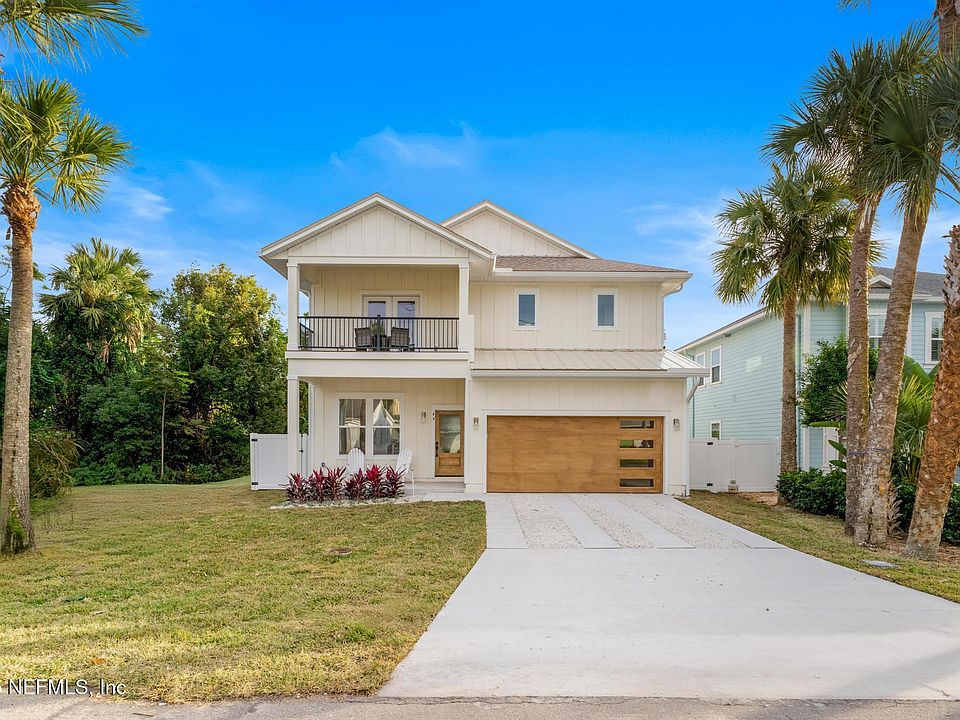
You might search online and see national average exterior painting costs that seem lower than the ranges above. Here is why: those national numbers often do not account for what it actually takes to paint a home in Florida.
Jacksonville’s climate creates specific demands that drive up the cost of a good paint job — and also make those higher costs worth paying.
Florida’s Intense UV Exposure Requires Premium Paint
Jacksonville gets intense sunlight year-round. Standard paint degrades much faster here than it does in cooler, cloudier climates in the northern United States. A cheap paint that might last eight years in Ohio will start fading and peeling in three to four years in Jacksonville. Painters who know this market use UV-resistant, premium acrylic latex paints — and those products cost more than what you would buy off a shelf at a home improvement store.
The good news: you only pay for premium paint once every 10 to 15 years instead of buying cheap paint every four years. The math works out strongly in favor of quality.
Humidity and Mildew Add Preparation Time
Jacksonville’s humidity is relentless. Even homes that look clean from the street often have significant mildew and algae growth on the north and shaded sides of the house. Before any paint goes on, that biological growth has to be completely removed — otherwise the new paint bonds to the mildew instead of the surface, and it peels off within months.
Proper pressure washing, mildewcide treatment, and drying time add labor hours that cheaper painters skip. That skipped preparation is usually why a paint job fails early.
Stucco Is Everywhere — and Stucco Has Special Needs
The vast majority of homes in Jacksonville have stucco exteriors. Stucco is a great material, but it develops hairline cracks over time from normal heat expansion and settling. Those cracks have to be repaired and sealed before painting. In many cases, professional painters recommend elastomeric coatings for stucco homes — a thicker, more durable product that bridges those cracks and forms a waterproof seal across the whole surface. Elastomeric coatings cost more per gallon and take more time to apply, which is reflected in the total project price.
Local note: If your home has stucco and a painter quotes you a price without mentioning crack repair or elastomeric coatings, ask them specifically about both. Painting over unrepaired cracks in stucco is one of the most common reasons Jacksonville homeowners end up repainting within four or five years.
Key Factors That Affect the Cost to Paint a House
Every painting project is different. Several variables influence pricing.
1. Size of the Home
The larger the home, the more labor and materials are required.
Exterior painting costs are typically calculated using square footage of the paintable area, not the interior living space.
For example:
A 2,500 sq ft home may have 3,000+ square feet of paintable surface depending on architecture.
2. Surface Material
Different exterior materials require different painting methods.
Stucco Homes
Very common in Jacksonville.
Often require:
-
Elastomeric coatings
-
Crack repairs
-
Specialized primers
Stucco homes often cost slightly more due to preparation and thicker coatings.
Wood Siding
Wood surfaces often require:
-
Sanding
-
Priming
-
Wood repair
These homes can require additional labor.
Fiber Cement (Hardie Board)
Newer Jacksonville homes frequently use fiber cement siding.
These surfaces generally require:
-
Less prep
-
Standard acrylic exterior paint
Which can reduce overall cost.
3. Paint Quality
Paint quality has a major impact on cost and longevity.
Premium paints cost more initially but can last several years longer.
Common professional brands include:
-
Sherwin-Williams
-
Benjamin Moore
-
Behr
Higher-end paints typically include:
-
UV resistance
-
Mildew protection
-
Strong adhesion
-
Longer warranties
These features are especially important in Florida’s climate.
7 Key Factors That Affect the Cost to Paint a House in Jacksonville
Every home is different, and the cost of painting yours will depend on a combination of these factors. Understanding each one helps you have a smarter conversation with any painter you talk to.
1. Size of the Home
This is the biggest single driver of cost. More surface area means more paint, more labor hours, and more time spent on preparation. Painters calculate their bids based on paintable square footage — all exterior walls, soffits, fascia, eaves, and trim — not your home’s interior living space.
A two-story home with the same interior square footage as a one-story home will typically cost 20 to 30 percent more to paint because of the additional height, the scaffolding or tall ladders required, and the extra safety setup involved.
2. Exterior Surface Material
The material your home’s exterior is made of has a big impact on both the preparation needed and the type of paint that should be used.
Stucco
Stucco is the most common exterior in Jacksonville. It requires careful inspection for cracks, proper sealing, and in most cases elastomeric coatings rather than standard paint. Stucco homes typically sit at the higher end of the cost range because of the preparation and material requirements.
Fiber Cement Siding (Hardie Board)
Fiber cement is common on newer Jacksonville homes and is one of the easier surfaces to paint. It is stable, holds paint well, and usually needs less prep than stucco or wood. It is primed at the factory and just needs a quality topcoat. Fiber cement homes often come in at the lower end of the cost range for materials, though labor costs remain similar.
Wood Siding
Wood is the most demanding surface to paint. It often needs sanding, spot priming, and sometimes rot repair before a brush ever touches it. Wood expands and contracts with temperature and moisture, so it needs a flexible, high-adhesion paint system to prevent cracking and peeling. Homes with wood siding typically fall on the higher end of pricing due to prep time and materials.
3. Condition of the Existing Exterior
A home that has been well-maintained and painted within the last eight to ten years needs much less prep work than one that has been neglected for fifteen years. The condition of the current surface directly affects how much labor the painter needs to do before applying new paint.
Signs that add to prep time and cost include:
- Peeling or flaking paint: Has to be scraped or sanded before new paint can bond properly.
- Visible mildew or algae: Requires pressure washing with mildewcide, not just a rinse.
- Cracked or damaged stucco: Needs filling, patching, and sometimes elastomeric coating.
- Rotted wood: Any rotted boards must be replaced before painting — you cannot paint over rot.
- Failing caulk around windows and trim: All old caulk has to come out and fresh caulk applied before painting.
4. Paint Quality
Paint quality is one of the most important — and most misunderstood — cost factors. Yes, premium paint costs more per gallon. No, it is not just a marketing upgrade.
In Jacksonville’s climate, the difference between a $35-per-gallon product and a $75-per-gallon premium product is very real:
| Factor | Budget Paint | Premium Paint |
| Typical cost per gallon | $25–$40 | $60–$85 |
| Expected lifespan in Jacksonville | 3–5 years | 10–15 years |
| UV / fade resistance | Basic | Advanced (engineered for FL) |
| Mildew resistance | Minimal | Built-in mildewcide additives |
| Moisture / crack bridging | Standard film | Elastomeric available |
| Cost over 15 years (repaints) | 3–4 paint jobs | 1 paint job |
The professional painters at A New Leaf Painting use Sherwin-Williams and Benjamin Moore products exclusively. Specifically, we commonly use Sherwin-Williams Emerald and Duration, and Benjamin Moore Aura and Regal Select — all of which are engineered for high-UV, high-humidity Florida environments.
5. Number of Stories and Accessibility
Single-story homes are the most straightforward to paint. Two-story homes require taller ladders, scaffolding in some areas, and more time spent on safety setup and repositioning. That extra labor is reflected in the price.
Beyond height, some homes have tricky access situations: dense landscaping tight against the walls, narrow side yards, decorative elements close to ground-level air conditioning units, or fencing that limits movement around the exterior. Any of these can add setup time and labor cost.
6. Trim, Shutters, and Architectural Detail
Trim painting takes longer than wall painting — it is careful, detail-oriented work that requires cutting in precisely and often switching between multiple colors. Homes with a lot of decorative trim, window shutters, columns, decorative brackets, or other architectural details will take more time to paint and cost more as a result.
Most professional exterior paint jobs use a different finish on trim and doors than on the main walls — typically semi-gloss for trim and doors, and satin for the main body. Each color and finish requires its own equipment setup and careful masking, which adds to labor time.
7. Color Change
If you are painting your home a dramatically different color — especially going from a very dark color to a light one, or the reverse — you will likely need additional coats of paint to achieve full, even coverage. Dark colors showing through a lighter topcoat require three coats instead of two, which increases both materials cost and labor time. When you are planning a color change, let your painter know upfront so they can account for it in the estimate.
Pro Tip: Going from dark to light is generally harder and more expensive than going from light to dark. If you are switching from a deep charcoal or dark green to a light gray or white, budget for at least one extra coat.
Where Does Your Money Go? A Realistic Cost Breakdown
When you pay for a professional exterior paint job, you are not just paying for paint. Here is a realistic breakdown of how a typical project budget is distributed:
| Cost Category | Approx. % of Total | What It Covers |
| Labor | 55–65% | Prep, application, cleanup, setup/breakdown |
| Paint and materials | 20–28% | Paint, primer, caulk, masking materials |
| Preparation work | 8–12% | Pressure washing, repairs, sanding, patching |
| Equipment and overhead | 5–8% | Ladders, scaffolding, sprayers, licensing, insurance |
Labor is by far the largest portion of any exterior painting project. Skilled exterior painting is physically demanding, time-intensive work — especially in Jacksonville’s heat and humidity. Painters who quote dramatically lower prices are almost always cutting corners on preparation time, applying thinner coats, or using lower-quality materials. Any of those shortcuts will cost you more money down the road.
A word on lowball quotes: If you get a quote that is 40 to 50 percent lower than others for the same scope of work, it is worth asking exactly what is included. Is the pressure washing included? How many coats? What brand and product of paint? A very low quote almost always means something important is being left out.
Why Preparation Is the Most Important Part of Any Exterior Paint Job


You can buy the most expensive paint in the world, but if it goes on a dirty, cracked, or poorly sealed surface, it will fail early. Preparation is not a bonus step — it is the foundation of a paint job that actually lasts. Here is what professional preparation looks like when done right.
Step 1: Pressure Washing
Every exterior surface gets thoroughly pressure washed before any work begins. In Jacksonville’s climate, even homes that look clean to the eye often have a layer of mildew, algae, pollen, dirt, and salt residue on the surface. Painting over any of that causes the new paint to bond to the contamination rather than the substrate — and it peels.
After pressure washing, the surface needs time to fully dry. In Jacksonville’s humidity, that usually means 24 to 48 hours before painting begins. Painters who skip this wait are putting wet paint on a damp surface, which causes adhesion problems.
Step 2: Scraping and Sanding Loose Paint
Any area where existing paint is peeling, bubbling, or flaking has to be scraped and sanded down to a stable surface. This is one of the most labor-intensive parts of the job — and one of the most commonly skipped by painters cutting corners. Painting over loose paint just buries the problem for a year or two before it shows up again, worse than before.
Step 3: Repairing Damaged Surfaces
Cracks in stucco need to be filled with flexible caulk or patching compound before painting. Any rotted wood boards need to be replaced entirely — no exceptions. Damaged sections of fiber cement siding need to be replaced or patched. Painting over structural damage makes the damage invisible but does not fix it. It keeps getting worse underneath.
Step 4: Caulking All Joints, Seams, and Penetrations
Every joint, seam, and gap around windows, doors, trim, utility lines, and exterior fixtures gets recaulked with high-quality paintable caulk. This is one of the most important steps for preventing water damage in Jacksonville. During our summer storm season, an unsealed gap around a window frame can let in a surprising amount of water during a hard rain.
Old, cracked caulk has to be removed before new caulk goes in — painting over failing caulk just delays the problem.
Step 5: Priming Where Needed
Not every surface needs a full primer coat, but many spots do: bare wood always needs primer, fresh stucco patches need primer to seal porosity, and any areas with rust staining, tannin bleed, or water stains need a stain-blocking primer before topcoat. Skipping primer in these areas leads to bleed-through and uneven sheen in the final coat.
Step 6: Applying Two Full Coats
Premium exterior paints are engineered to perform at a specific film thickness, achieved by applying two full coats. One coat is not enough — it leaves the substrate under-protected and the finish looking uneven. A proper two-coat application is what allows premium paint to reach its rated 10 to 15 year lifespan in Jacksonville’s climate. Always ask your painter specifically how many coats are included in the bid.
What to ask every painter: How many coats are included? What is the dry time between coats? What brand and specific product of paint are you using? A professional can answer all three questions immediately.
Additional Factors That Influence Painting Costs
Some homes require additional work that can affect pricing.
Two-Story Homes
Multi-story homes require ladders or scaffolding which increases labor time.
Trim and Architectural Detail
Homes with extensive trim, shutters, or decorative elements require additional painting time.
Color Changes
Changing from dark to light colors may require additional coats of paint.
Accessibility
Homes with difficult access or landscaping obstacles may require additional setup time.
How Long Should Exterior Paint Last in Jacksonville, Florida?
Paint lifespan in Northeast Florida is shorter than national averages because of the UV exposure, humidity, and salt air that exterior surfaces face here. But with the right products and proper preparation, you can still get a decade or more out of a paint job.
| Surface | Budget Paint | Premium Paint | Main Factor |
| Stucco (inland) | 3–5 years | 8–12 years | Elastomeric vs. acrylic |
| Stucco (coastal/salt air) | 2–4 years | 6–9 years | Salt air exposure level |
| Fiber Cement (Hardie Board) | 5–7 years | 10–15 years | Caulk maintenance at joints |
| Wood Siding | 3–5 years | 7–10 years | Primer quality; moisture control |
| Exterior Trim and Doors | 3–4 years | 5–8 years | Finish type; UV exposure |
The single biggest factor separating a three-year paint job from a twelve-year one is not the brand name on the can — it is preparation. Premium paint on a properly prepared surface can last three to four times longer than the same paint applied over a dirty, cracked, or poorly sealed surface.
Signs it is time to repaint: Paint peeling or bubbling away from the surface. Colors faded significantly from their original appearance. Visible mildew or algae staining that cannot be washed off. Bare spots where paint has worn through. Caulking cracked, missing, or pulling away around windows and doors.
What Is the Best Time of Year to Paint a House in Jacksonville?
Jacksonville’s climate means exterior painting can happen year-round, but some months are better than others. Here is what you need to know about timing.
Spring (March through May) — The Best Season
Spring is widely considered the best time for exterior painting in Jacksonville. Temperatures are mild — typically in the 65 to 80 degree range — and humidity is lower than in summer. Paint cures best when temperatures are stable and humidity is moderate. There is also less chance of the afternoon thunderstorms that make summer painting unpredictable.
Spring is also when most homeowners start thinking about exterior projects, which means painters can get busy quickly. If you are planning a spring project, booking in February or early March is smart.
Fall (October through November) — Also Excellent
Fall is the second-best season for exterior painting in Jacksonville. Hurricane season is winding down, temperatures are dropping back to a comfortable range, and humidity begins to ease. October and November are ideal months for exterior work. December can also work well, though temperatures occasionally dip in ways that affect paint cure times.
Summer (June through September) — Possible but Challenging
Summer in Jacksonville is hot, humid, and stormy — especially in the afternoons. Painting can still be done in summer, and many professional painters work through it, but it requires careful scheduling around afternoon storms and attention to the paint’s temperature and humidity requirements. Some paint products have limitations on how hot it can be when applied. Summer is generally not the first choice for timing a painting project.
Winter (December through February) — Mild and Workable
Jacksonville winters are mild by national standards — temperatures rarely drop below 40 degrees for long. Most exterior painting can proceed normally through winter here. There can be some cold snaps that require a short pause, but winter in Northeast Florida is a perfectly reasonable time for exterior painting. It is also when painters tend to be less busy, which can mean faster scheduling and sometimes better availability.
Frequently Asked Questions: Painting Costs in Jacksonville, FL
These are the questions Jacksonville homeowners ask us most often. Each answer is written to be directly useful whether you are reading this on a screen or asking a voice assistant or AI tool.
How much does it cost to paint a house exterior in Jacksonville, Florida?
The cost to paint a house exterior in Jacksonville, FL typically ranges from $3,500 to $14,000 or more, depending on the size of the home, the surface material, the condition of the exterior, and the paint quality selected. A typical single-story home of 1,500 to 2,500 square feet costs between $4,500 and $9,000 for professional painting with premium materials and full preparation. Larger homes, two-story structures, or homes requiring significant surface repairs will cost more.
How Much Does Interior House Painting Cost?
Is it cheaper to paint your own house in Jacksonville?
Painting your own house in Jacksonville reduces your upfront labor cost, but there are real tradeoffs. You will need to rent or buy equipment including a pressure washer, ladders, and sprayer. You will need to invest significant time — typically several full weekends for a complete exterior. And if preparation steps are rushed or skipped, the paint job will fail earlier, meaning you will be repainting sooner than if you had hired a professional. For most homeowners, especially those with stucco homes or two-story homes, professional painting delivers better long-term value.
How often should you repaint the exterior of a house in Jacksonville?
Most Jacksonville homes need exterior repainting every 8 to 12 years when professional-grade paint is properly applied over well-prepared surfaces. Homes painted with budget materials or minimal preparation may need repainting every 3 to 5 years. Homes in coastal areas near the Atlantic Ocean or Intracoastal Waterway may need attention every 6 to 9 years due to salt air exposure. The single biggest factor in paint lifespan is preparation quality — not brand name.
What is the best time of year to paint a house exterior in Jacksonville?
Spring — March through May — is the best time of year to paint a house exterior in Jacksonville, Florida. Temperatures are mild, humidity is lower, and afternoon thunderstorms are less frequent than in summer. Fall — October through November — is the second-best option. Summer can be done but is challenging due to heat, humidity, and daily storms. Winter is mild and workable in Jacksonville with occasional cold-snap pauses.
Why is exterior painting more expensive in Jacksonville than national averages?
Exterior painting in Jacksonville costs more than national averages for three main reasons. First, Florida’s intense UV exposure requires premium, UV-resistant paint products that cost more per gallon. Second, Jacksonville’s high humidity means more thorough preparation — including pressure washing, mildewcide treatment, and longer drying times — before paint can be applied. Third, stucco is the dominant exterior material in Jacksonville, and stucco homes often require elastomeric coatings and crack repair, both of which add to material and labor costs.
What does the cost of painting a house include?
A professional exterior painting bid from a reputable Jacksonville painter should include pressure washing, surface repairs (minor cracks, failed caulking), recaulking of all joints and penetrations, priming where required, application of two coats of premium paint on all walls and surfaces, and painting of trim and doors. Always confirm what is specifically included in any quote you receive — and get it in writing before work begins.
What paint brands do professional painters in Jacksonville use?
Professional exterior painters in Jacksonville most commonly use Sherwin-Williams and Benjamin Moore products. Top products for Florida conditions include Sherwin-Williams Emerald Exterior, Sherwin-Williams Duration Exterior, Benjamin Moore Aura Exterior, and Benjamin Moore Regal Select Exterior. These products are specifically engineered for high-UV, high-humidity environments and outperform standard hardware-store paint significantly in Florida’s climate.
How many coats of paint does an exterior need in Jacksonville?
A properly done exterior paint job in Jacksonville requires two full coats of premium paint. One coat is not sufficient — it leaves the underlying surface under-protected and the finish looking thin and uneven. Two coats applied at the correct film thickness is what allows a premium paint product to reach its rated lifespan of 10 to 15 years. Always ask any painter you are interviewing how many coats are included in their bid.
Do I need elastomeric coating on my Jacksonville stucco home?
Elastomeric coating is the professional recommendation for most stucco homes in Jacksonville, Florida. Stucco naturally develops hairline cracks over time from heat expansion and settling, and standard acrylic paint cannot bridge or seal those cracks. Elastomeric coatings are thick and flexible enough to span hairline cracks and form a continuous waterproof membrane across the stucco surface — which is critical in Jacksonville’s heavy-rain seasons. On stucco, elastomeric coatings typically last three to five years longer than standard paint.
Is it cheaper to paint a house yourself?
DIY painting can reduce labor costs, but exterior painting requires proper preparation, equipment, and safety measures. Many homeowners prefer professional painters to ensure long-lasting results.
How often should homes be repainted in Florida?
Most homes in Florida require repainting every 8–12 years, depending on surface material and environmental exposure.
What time of year is best for exterior painting in Jacksonville?
Spring and fall are ideal because temperatures and humidity levels are more stable, allowing paint to cure properly.
About A New Leaf Painting — Jacksonville’s Exterior Painting Specialists
A New Leaf Painting was founded in Jacksonville, Florida and has been serving homeowners throughout Northeast Florida since 2003. Our team has completed more than 5,000 exterior residential painting projects in Jacksonville, Jacksonville Beach, Atlantic Beach, Neptune Beach, Ponte Vedra Beach, Fleming Island, Orange Park, Fernandina Beach, and the surrounding communities.
Every cost estimate and recommendation in this guide comes from two decades of real-world experience painting homes in this specific market. We know which products perform in Florida’s heat and humidity, which preparation steps actually matter, and what fair pricing looks like for the quality of work that lasts.
We hold all required Florida contractor licenses, carry full liability insurance and workers compensation coverage, and stand behind our work with a warranty on both materials and workmanship.
What Jacksonville Homeowners Get With A New Leaf Painting
- Free, no-obligation exterior painting estimates with transparent, itemized pricing
- Professional color consultations using Sherwin-Williams and Benjamin Moore color systems
- Full preparation: pressure washing, surface repairs, caulking, and priming
- Premium paint systems matched to your surface type, exposure level, and budget
- Documented two-coat application with material records provided at project completion
- Workmanship and paint performance warranty
- Hundreds of verified five-star reviews from Jacksonville homeowners
Get Your Free Jacksonville Exterior Painting Estimate
Call or text 904-615-6599 — no obligation, no pressure.
We provide detailed, itemized written estimates so you know exactly what you are paying for.
A New Leaf Painting has been protecting and transforming Jacksonville homes since 2001 — and we know that a great result starts long before the first brushstroke. Every project begins with professional power washing and honest surface assessment. If we find damaged wood, our carpentry repair team handles it first — because no paint job lasts on a compromised surface. For stucco homes, we treat and patch cracks with our stucco repair service before any coating goes on. When every surface is ready, our exterior painting and interior painting teams apply premium Sherwin-Williams and Benjamin Moore products — the right system for Florida’s UV, humidity, and salt air conditions. We also offer epoxy and concrete coating for garages and outdoor surfaces.
Wondering what any of these services will cost before you call? We believe in total transparency on pricing. Our exterior painting cost guide, interior painting cost guide, and concrete coating cost guide all break down real Jacksonville pricing so you know exactly what to expect before we ever set foot on your property. When you are ready, call or text 904-615-6599 for a free, no-surprise estimate backed by our Iron-Clad Guarantee.
Serving Jacksonville • Jacksonville Beach • Ponte Vedra • Atlantic Beach • Neptune Beach • Orange Park • Fleming Island
✅ Schedule your free exterior painting estimate today.


