One of the questions we hear most often from Jacksonville homeowners is: how long should my paint job last? And the honest answer is that it depends on a few things that are specific to your home — what the outside is made of, where your house is located, what kind of paint was used, and how well the surface was prepared before the paint went on.
In this guide, we will walk through all of it. You will learn the realistic lifespan you should expect for different exterior surfaces in Northeast Florida, what warning signs tell you it is time to repaint even if you have not hit the typical timeframe, what our climate does to paint, and what you can do to squeeze the most years out of every paint job.
Who wrote this: A New Leaf Painting has been painting homes in Jacksonville and Northeast Florida since 2003. We have completed more than 5,000 exterior projects across this market. The lifespan data and recommendations in this guide come from two decades of observing how paint actually performs in Florida’s specific conditions — not from national averages that do not account for our climate.
Quick Answer
Most Jacksonville homes need exterior repainting every 8 to 12 years when professional-grade paint is applied over properly prepared surfaces. Homes with fiber cement siding can go 10 to 15 years. Wood siding typically needs attention every 7 to 10 years. Trim and doors usually need repainting every 5 to 8 years. Coastal homes near the Atlantic or Intracoastal Waterway may need repainting sooner due to salt air exposure.
Those timelines assume premium paint and full professional preparation. Budget paint or skipped prep can cut those numbers in half — meaning a repaint every 3 to 5 years instead of every 10 to 12.
How Long Does Exterior Paint Last in Jacksonville, Florida?
The short answer is that it depends on what your home is made of. Different exterior materials behave very differently under Jacksonville’s sun, humidity, and rain. Here is a realistic breakdown of what to expect from each surface type when premium paint and professional preparation are used.
| Surface Type | Premium Paint | Budget Paint | Coastal Reduction | Key Driver |
| Stucco | 8–12 years | 3–5 years | −2–3 years | Elastomeric vs. acrylic |
| Fiber Cement (Hardie Board) | 10–15 years | 5–7 years | −1–2 years | Joint caulk maintenance |
| Wood Siding | 7–10 years | 3–5 years | −1–2 years | Primer quality; moisture |
| Trim & Doors | 5–8 years | 3–4 years | −1 year | Finish type; UV exposure |
| Brick / Masonry | 8–12 years | 4–6 years | −1–2 years | Breathable coating use |
Why coastal homes wear faster: Salt air is corrosive. Homes within two to three miles of the Atlantic Ocean, Jacksonville Beach, Neptune Beach, Atlantic Beach, or the Intracoastal Waterway are exposed to airborne salt particles year-round. Salt attacks paint film, accelerates rust on any metal components, and breaks down sealants faster than homes in inland Jacksonville. If your home is in a coastal area, plan on the lower end of these ranges.
It is also worth knowing that these ranges assume two important things: premium paint applied at the correct thickness, and thorough professional preparation before any paint goes on. Skip either one of those, and the lifespan drops significantly. We will talk more about both of those factors later in this guide.
7 Warning Signs Your Jacksonville Home Needs Repainting Now


You do not always have to wait until a specific number of years have passed to know it is time. Your home’s exterior will actually tell you when the paint is failing — if you know what to look for. Here are the seven most important warning signs to watch for on any Jacksonville home.
1. Paint Is Peeling or Bubbling Away From the Surface
Peeling and bubbling are the most obvious signs that paint has failed. When you see paint lifting away from the wall in flakes or bubbles, it means the bond between the paint and the surface underneath has broken down. This almost always happens because moisture got behind the paint film — either through a crack, a failed caulk joint, or improper preparation that left the surface damp when paint was applied.
This is not something to ignore. Once paint starts peeling, it accelerates. Water gets into the exposed substrate — stucco, wood, or fiber cement — and causes damage that goes well beyond just the paint. Peeling paint on wood, for example, is often the first visible sign of rot developing underneath.
Do not wait on this one: Peeling paint allows water directly into your home’s exterior structure. The longer you wait, the more expensive the repair gets — because you are no longer just repainting, you are also repairing damaged substrate.
2. Fading and Washed-Out Color
Florida’s UV radiation is intense year-round, and it is the number one cause of paint fading. UV rays break down the pigment molecules in paint, causing vibrant colors to gradually look dull, chalky, or washed out. A deep navy that looked sharp when it was painted starts looking like a pale blue-gray. A rich green fades to a tired sage.
Some fading is normal and expected over time — that is not an emergency. But when the fading is severe enough that the house looks noticeably different from its original color, or when the color is uneven across the surface, that signals the paint film itself is degrading. At that point, the paint is losing its protective properties along with its appearance.
Quick test: Take a photo of your home’s exterior and compare it to a photo from just after it was last painted. If you cannot find one, look at the paint color on a section that is shielded from direct sun — under an eave or inside a recessed corner — and compare it to a fully exposed wall. The contrast tells you how much fading has occurred.
3. Chalky Residue When You Run Your Hand Across the Wall
Try this simple test: run your hand across the exterior wall of your home. If your hand comes away with a white or colored powdery residue, that is called chalking, and it means the paint binder is breaking down.
Paint is made of two main components: pigment (the color) and binder (what holds the pigment together and bonds it to the surface). When UV radiation and weathering break down the binder, the pigment particles are released as a loose powder instead of staying locked in the film. Chalking is the paint literally falling apart at a molecular level.
A little chalking is normal toward the end of a paint job’s life. Heavy chalking — where a significant amount of powder transfers to your hand — means the coating has reached the end of its useful life and needs to be replaced.
4. Visible Mildew, Mold, or Algae Growth
In Jacksonville’s humidity, mildew and algae love to grow on exterior surfaces — especially on the north-facing sides of homes and in shaded areas that stay damp longer after rain. You will usually see it as dark green, black, or gray staining that spreads across the surface in patches.
A small amount of surface mildew can sometimes be cleaned off with a pressure wash and mildewcide treatment without needing a full repaint. But if mildew keeps coming back quickly after cleaning, or if it is growing extensively across multiple surfaces, it is a sign that the paint’s mildew-resistant additives have worn out. At that point, a fresh coat of premium paint with built-in mildewcide is the right solution.
Mildew on exterior walls is also worth addressing promptly for health reasons — particularly on homes with wood or fiber cement siding, where sustained moisture and biological growth can begin breaking down the substrate itself.
5. Cracking, Crazing, or Checking Patterns in the Paint
If you see a pattern of cracks in the paint — sometimes called crazing or checking — it means the paint film has lost its flexibility and has become brittle. In Jacksonville, where exterior surfaces expand and contract with temperature changes and humidity swings throughout the year, paint needs to stay flexible to move with the surface. When it can no longer do that, it cracks.
Small hairline cracks in the paint are often a sign that the paint is old and reaching the end of its service life. Larger, deeper cracks — especially in stucco — can indicate both paint failure and underlying structural movement that needs to be addressed before repainting.
6. Caulking Cracked, Shrunken, or Missing Around Windows and Doors
Technically this is a caulk issue rather than a paint issue, but it is one of the most important things to check during any exterior inspection. The caulk around your windows, doors, trim intersections, and utility penetrations is what keeps water from getting behind the surface and into the wall structure.
Caulk has a shorter lifespan than paint — typically five to eight years even with quality products. When it starts to crack, pull away from the surface, or simply disappear in spots, water infiltration during Jacksonville’s heavy rain seasons can cause significant damage very quickly.
Many homeowners discover that by the time their paint is ready for replacement, the caulk is already well past due. A full repaint should always include recaulking all joints and penetrations with fresh, flexible caulk — and if you see failing caulk before your paint is ready to be replaced, it is worth addressing it on its own.
7. Bare or Thin Spots Where Paint Has Worn Through
On heavily exposed areas — surfaces that face southwest and get the most direct afternoon sun, areas near the roofline, or surfaces directly exposed to prevailing rain — paint can wear thin or even down to bare substrate before the rest of the house looks bad. Corner edges, areas around fixtures, and the tops of horizontal surfaces are especially prone to this.
Bare spots expose the underlying material directly to weather. On wood, bare spots lead quickly to water absorption and rot. On fiber cement, bare edges absorb moisture and can swell. On stucco, bare areas allow water infiltration into the masonry. Any bare spot you find should be addressed as soon as possible, even if the rest of the home looks fine.
Annual inspection tip: Walk around your home once a year and look specifically for these seven warning signs. Catching paint failure early — before it becomes substrate damage — is almost always less expensive to fix than waiting until it is obvious.
How Jacksonville’s Climate Affects Exterior Paint Lifespan
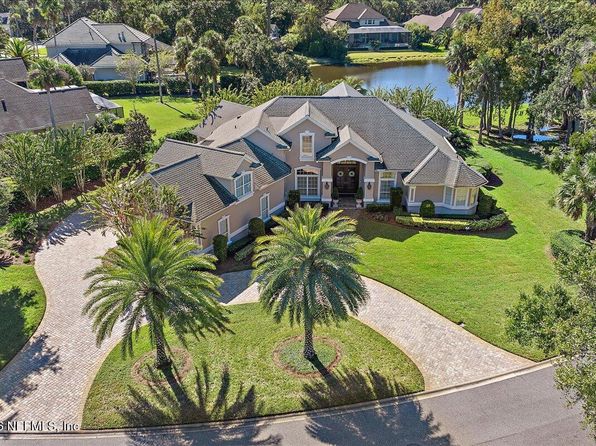

Jacksonville’s environment is hard on exterior paint in ways that are different from most other parts of the country. Understanding exactly what the climate is doing to your paint helps explain why certain products and preparation methods matter so much here.
UV Radiation: The Biggest Threat to Paint in Florida
Florida receives more annual UV radiation than almost any other state. Jacksonville’s latitude and mostly clear skies mean that paint here is exposed to intense ultraviolet light for more hours per year than paint on homes in the Midwest, Northeast, or Pacific Northwest.
UV radiation attacks paint in two ways. First, it breaks down the pigment molecules — which is why colors fade. Second, it degrades the paint’s binder — the component that gives the paint film its strength, flexibility, and adhesion. A paint film with a degraded binder becomes brittle, chalky, and prone to cracking and peeling.
This is why premium exterior paints engineered for Florida conditions cost more than generic products. They contain higher concentrations of UV-absorbing compounds and more durable binder systems that resist UV breakdown significantly longer. Sherwin-Williams Emerald and Benjamin Moore Aura, for example, are specifically formulated with advanced UV-resistance technology that generic or budget paints do not include.
Humidity: Moisture That Never Fully Goes Away
Jacksonville’s average relative humidity stays above 70% for most of the year. That persistent moisture creates two problems for exterior paint.
First, it encourages mildew and algae growth on any surface that holds moisture. Mildew does not just look bad — it secretes acids that slowly break down paint film and, in some cases, the substrate underneath it. Paint that lacks mildewcide additives will show mildew staining within one to two years in Jacksonville’s climate.
Second, high ambient humidity means that surfaces stay slightly damp for longer after rain, which extends the window during which paint film is exposed to moisture. Over years of repeated wet-dry cycles, this causes paint to lose adhesion gradually. Flexible, breathable paint formulas handle these cycles better than rigid or vapor-barrier coatings.
Heavy Rain: 52 Inches Per Year and Climbing
Jacksonville averages about 52 inches of rain per year — well above the national average of 38 inches. Most of that rain comes in the summer months as intense, fast-moving afternoon thunderstorms that can drop an inch of rain in under an hour.
That volume of water, hitting surfaces repeatedly at high velocity, is a significant stress test for any paint system. Paint that has developed even small cracks or pinholes will admit water during these heavy rain events. Once water gets behind the paint film, it has nowhere to go — and it starts breaking down the bond between paint and substrate from the inside.
High-quality acrylic latex paint and elastomeric coatings form a continuous, water-shedding film that resists this kind of moisture infiltration. Budget products with thinner film builds cannot do the same.
Temperature Swings and Thermal Expansion
Jacksonville does not have extreme winters, but it does have significant temperature swings across the year — from days above 95 degrees in summer to occasional cold snaps in the 30s in winter. That range means exterior surfaces are constantly expanding and contracting as temperatures change.
Paint needs to be flexible enough to move with those surface changes without cracking. Acrylic latex paint maintains this flexibility better than older oil-based formulas or lower-quality products that become brittle over time. When you see a crazed or checked crack pattern in old paint, you are looking at what happens when paint loses that flexibility — it can no longer keep up with the surface movement and splits instead.
Salt Air in Coastal Jacksonville Communities
This factor is specific to homes near the water. Salt carried in the air from the Atlantic Ocean or the Intracoastal Waterway deposits on every exposed surface of a coastal home. Over time, that salt is corrosive — it attacks paint film chemistry, promotes rust on any metal surfaces, and degrades sealants and caulk faster than in inland areas.
Homes in Jacksonville Beach, Atlantic Beach, Neptune Beach, Ponte Vedra Beach, and neighborhoods along the Intracoastal consistently show shorter paint lifespans than comparable homes even ten miles inland. If your home is in one of these areas, plan your repaint schedule accordingly and ask specifically about coatings rated for coastal or marine environments.
How to Make Your Exterior Paint Last Longer in Jacksonville
The good news is that paint lifespan is not entirely out of your hands. There are specific things you can do — both when the painting is being done and in the years after — that make a real difference in how long a paint job holds up in Florida’s climate.
1. Start With the Right Paint Product
This is the single most impactful decision in the entire project. The difference between a budget paint and a premium paint is not cosmetic — it is the actual chemistry of the product. Premium exterior paints use higher-grade pigments, more durable binder systems, and specific additive packages (UV inhibitors, mildewcides, elastomeric flexibility agents) that simply do not exist in lower-cost products.
For Jacksonville homes, the products we recommend and use most often are:
- Sherwin-Williams Emerald Exterior: Top-tier UV resistance and color retention. Best overall choice for most Jacksonville homes.
- Sherwin-Williams Duration Exterior: Outstanding mildew resistance. Excellent for shaded elevations and homes with a history of mildew growth.
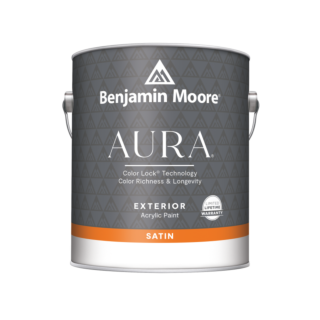
- Benjamin Moore Aura Exterior: Best-in-class color lock technology. Ideal if deep or custom colors are a priority.
- Benjamin Moore Regal Select Exterior: Premium mid-tier performance. Strong adhesion on fiber cement and wood.
- Elastomeric coatings (stucco homes): Specifically for stucco — bridges hairline cracks, forms a waterproof membrane, lasts 3 to 5 years longer than standard acrylic on masonry surfaces.
2. Never Skip or Rush Preparation
The most common reason paint fails earlier than expected is not the paint product — it is what happened before the paint was applied. Preparation is what allows paint to bond to the surface and stay there through years of Florida weather.
A proper professional preparation process includes:
- Full pressure washing: Removes mildew, algae, salt residue, dirt, and any chalky old paint that would prevent adhesion. Surfaces must fully dry — 24 to 48 hours in Jacksonville’s humidity — before painting begins.
- Scraping and sanding: Any peeling or loose paint is removed down to a stable surface. Painting over loose paint guarantees early failure.
- Crack repair: Cracks in stucco and siding are filled with flexible patching compound or caulk. On stucco, elastomeric coating is applied afterward to bridge remaining micro-cracks.
- Full recaulking: All joints, window frames, door frames, trim intersections, and utility penetrations are recaulked with fresh, paintable, flexible caulk.
- Spot priming: Bare wood, fresh patches, and any areas with staining are primed before topcoat. This locks out tannins, rust bleed, and water staining that would otherwise show through the new paint.
- Two full coats: Applied at the correct film thickness per the manufacturer’s specification. One coat is not enough to reach the rated lifespan.
3. Wash Your Home Every Year or Two
One of the simplest and cheapest things you can do to extend the life of your exterior paint is to wash your home regularly. In Jacksonville, mildew, algae, pollen, and salt residue build up on exterior surfaces year-round. Letting that buildup sit breaks down paint chemistry over time.
A soft-wash cleaning or gentle pressure wash every one to two years removes the biological growth and surface contamination before it can do lasting damage. This is not a job that requires repainting — it is basic maintenance that can add years to your current paint job.
Important: Do not use high-pressure settings directly on paint surfaces. High pressure can damage paint film, force water into gaps and joints, and strip caulk. Use a lower-pressure, higher-volume soft-wash approach for regular cleaning.
4. Inspect Caulking Every Few Years
Caulk wears out faster than paint. Even with high-quality products, you should expect caulk around windows, doors, and trim to need attention every five to seven years. Walk around your home and look closely at every joint and seam. Press on the caulk with your finger — if it is cracked, hard, or pulling away from the surface, it needs to be replaced.
Recaulking a home is a relatively inexpensive job, especially compared to the water damage that failed caulk can allow. Staying on top of it between full repaints is one of the best investments you can make in your home’s exterior.
5. Address Small Problems Before They Become Big Ones
If you find a small area of peeling paint, a spot where mildew is growing aggressively, or a place where the caulk has completely failed, deal with it as soon as possible. A small scrape-and-touch-up job is fast and inexpensive. The same spot ignored for two more years is often a rotted board, a water-stained interior wall, or a stucco repair that costs ten times as much.
The goal of regular inspection is not to find reasons to panic — it is to catch small problems while they are still cheap and easy to fix.
When Jacksonville Homeowners Should Schedule Repainting
Homeowners should begin planning repainting when paint reaches the 8–10 year mark, even if there are no obvious signs of failure.
Repainting before major paint failure occurs helps avoid costly siding or stucco repairs.
Professional Exterior Painting in Jacksonville
A New Leaf Painting has helped thousands of Northeast Florida homeowners maintain beautiful and durable exteriors.
Our team provides professional consultations to help determine when homes should be repainted and which paint systems perform best in Jacksonville’s climate.
Best Exterior Paint for Jacksonville and Northeast Florida Homes
Since paint quality has such a direct impact on lifespan, it is worth spending a few minutes on which products actually perform best here. This is not about brand loyalty — it is about what we have seen hold up over 20 years of painting homes in this climate.
Premium Acrylic Latex: The Right Choice for Most Surfaces
Acrylic latex is the dominant exterior paint type used by professional painters across Florida. For the vast majority of Jacksonville homes — regardless of whether the exterior is stucco, fiber cement, or wood — a premium acrylic latex product is the correct starting point.
Here is why acrylic latex works so well in Jacksonville’s conditions:
- Flexibility: Acrylic latex stays flexible as it ages, which means it moves with surfaces as they expand and contract with temperature and humidity changes instead of cracking.
- Moisture resistance: A properly applied acrylic film sheds water effectively and resists moisture infiltration during rain events.
- Mildewcide technology: Premium acrylic products have mildewcide additives built directly into the formula — critical in Jacksonville’s year-round humidity.
- UV durability: High-end acrylic products like Emerald and Aura contain UV-absorbing compounds that significantly slow fading and film degradation under Florida sun.
- Easy maintenance: Acrylic surfaces clean up easily and can be spot-touched without visible sheen differences when the same product is used.
Elastomeric Coatings: The Standard for Florida Stucco
If your home has a stucco exterior, elastomeric coating is not an upgrade — it is the professional standard. Here is the problem elastomeric coatings solve: stucco naturally develops hairline cracks over time from thermal expansion, settling, and normal movement. Those cracks are too small to fill individually and too numerous to caulk. Standard acrylic paint cannot bridge them — it just paints over them, and water eventually finds its way in.
Elastomeric coatings are thick and rubbery. They are applied at two to three times the film thickness of standard paint, and they remain flexible enough to stretch across hairline cracks without cracking themselves. Think of it as a continuous waterproof membrane stretched over the entire stucco surface.
The benefits for a Jacksonville stucco home are significant:
- Crack bridging: Spans hairline cracks up to 1/16 inch, preventing water infiltration at those points.
- Waterproof membrane: Creates a seamless, continuous film across the entire stucco surface.
- Extended lifespan: On stucco, elastomeric coatings typically last three to five years longer than standard acrylic paint.
- Reduced maintenance: Fewer repairs and repaints over the lifetime of the home, which offsets the higher initial material cost.
Paint Finish: Which Sheen Level for Each Surface
The finish (sheen level) of paint affects both appearance and durability. Here is the professional recommendation for each surface on a Jacksonville home:
| Surface | Recommended Finish | Why |
| Stucco walls | Flat or matte | Hides texture variation; no distracting reflections on rough surface |
| Smooth siding (fiber cement, wood) | Satin | Durable, easy to clean, slight sheen adds curb appeal |
| Trim, window frames, fascia | Semi-gloss | Hard, durable, easy to clean; handles direct weather exposure |
| Doors and shutters | Semi-gloss | Withstands handling and UV; contrast with satin body looks sharp |
The most popular exterior paint system for Jacksonville homes is flat or satin on the main body and semi-gloss on all trim and doors. The visual contrast between the two finishes gives a home a clean, polished look that holds up in Florida’s intense sunlight.
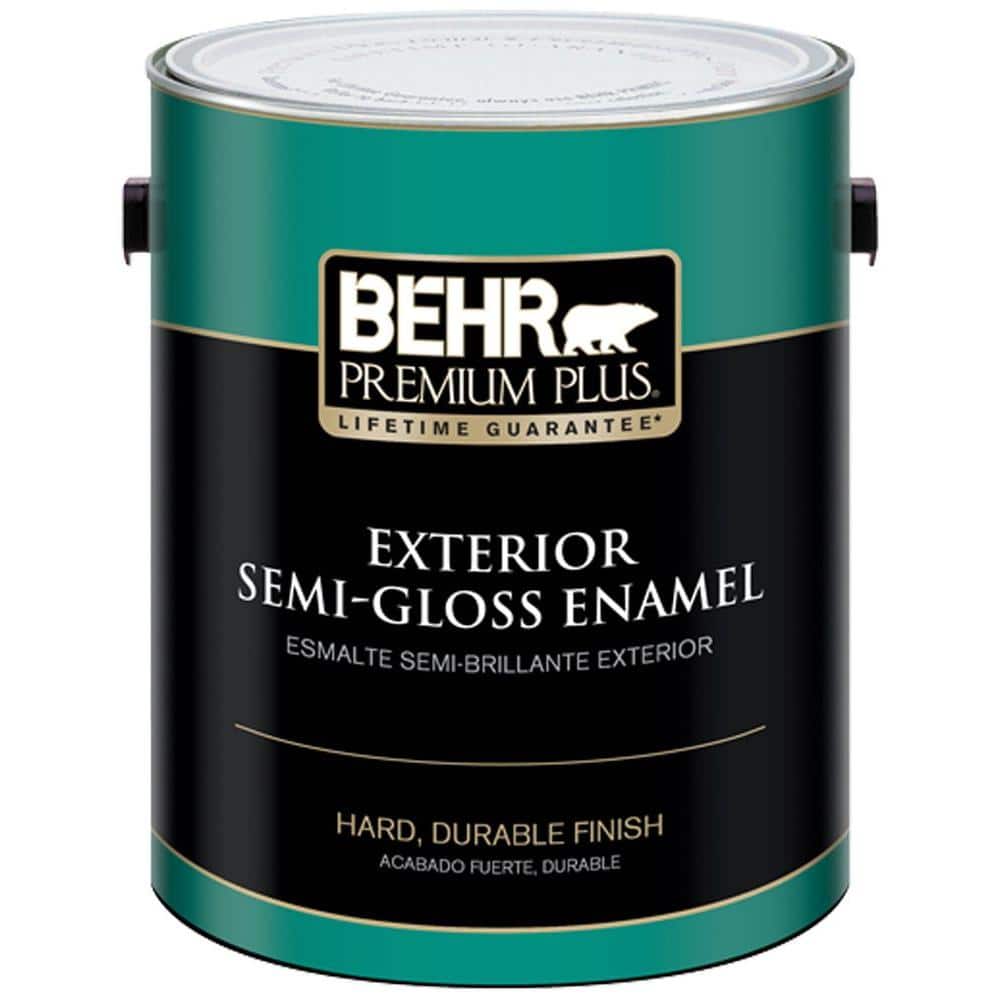
Top Exterior Paint Brands for Florida Homes

Best Exterior Paint Colors for Jacksonville Homes
Color choice affects more than just how your home looks — it also affects how long the paint job holds up. In Florida’s climate, some color choices perform noticeably better than others.
Color and Paint Longevity: What You Need to Know
UV radiation fades color by breaking down the pigment molecules in paint. Lighter colors contain less pigment and reflect more UV light, which is why they fade more slowly than dark colors. A pale gray or soft white exposed to Florida sun will still look close to its original shade after eight years. A deep charcoal or saturated navy may look noticeably faded after four or five years.
This does not mean you have to paint your house white. Premium paints like Sherwin-Williams Emerald and Benjamin Moore Aura use advanced pigment systems and UV-lock technology that reduce fading even in deeper colors. But if long paint lifespan is your top priority, leaning toward lighter values will always give you an advantage in Florida.
Practical tip: If you want a deep or bold color, ask your painter which specific product they are using. Emerald and Aura are the two products with the strongest fade resistance for deep colors in Florida’s UV environment. Not all paints handle bold colors the same way.
Most Popular and Best-Performing Color Palettes for Northeast Florida
Soft Coastal Blues and Seafoam
Light coastal blues — sky blue, seafoam, pale aqua — are perennially popular in Jacksonville and the beach communities. They complement the natural environment, reflect sunlight well, and hold their color beautifully over time. A classic pairing is a soft coastal blue body with bright white trim and dark charcoal or navy shutters.
Warm Beige, Sand, and Cream Tones
Warm neutral tones are the most forgiving in Florida’s sun because their light pigments resist UV fading better than most other color families. They look welcoming and warm, blend naturally with Florida’s sandy landscape, and pair well with nearly any trim color. Common pairings: warm beige body with white or ivory trim and dark bronze or brown accents.
Light and Medium Gray
Gray has become the most prevalent exterior trend in Florida over the past decade. Light grays are clean, versatile, and perform very well in high-UV environments. They pair sharply with white trim or with bold black doors and shutters for a modern, high-contrast look. Avoid very dark grays in coastal areas — they absorb more heat and fade faster under intense sun.
Classic White
White is timeless and arguably the best performer from a pure physics standpoint — it reflects UV radiation and heat more effectively than any other color. A crisp white home with dark contrasting trim (black, navy, deep green, or charcoal) is a classic look that never goes out of style and holds up beautifully in Florida’s environment.
Muted Sage and Earth-Tone Greens
Muted, earthy greens — sage, soft olive, dusty moss — have grown consistently in popularity across Northeast Florida. They feel connected to the natural landscape and work especially well with homes surrounded by mature trees and tropical vegetation. Pair with warm white or natural wood trim for a relaxed, organic look.
When Should You Schedule Your Jacksonville Exterior Repaint?
Knowing the warning signs and the general lifespan ranges is helpful — but when is the actual right time to pick up the phone and schedule a painting project?
The 8 to 10 Year Mark: Plan Proactively, Not Reactively
Most Jacksonville homeowners wait until their paint is visibly failing — peeling, heavily faded, showing mildew — before they start thinking about repainting. That is understandable, but it is also more expensive. By the time paint failure is obvious, there is often substrate damage that has to be repaired before the new paint can go on.
The smarter approach is to start planning a repaint when your home reaches the eight to ten year mark, even if it still looks reasonably good. Getting ahead of the failure means:
- Less preparation work and repair cost when the painter arrives
- No substrate damage to address before painting
- More flexibility on timing and scheduling — you are not in emergency mode
- Better results from the new paint job because it is going on a clean, sound surface
Spring and Fall Are the Best Seasons
In Jacksonville, spring (March through May) and fall (October through November) are the best times of year for exterior painting. Temperatures are mild, humidity is lower than in summer, and afternoon thunderstorms are less frequent than during storm season. Paint cures best in stable, moderate conditions — not in July’s 95-degree heat and 90% humidity.
Spring in particular tends to book up quickly. If you are planning a spring project, contacting a painter in late February or early March gives you the best chance of getting your preferred dates.
After a Major Storm or Hurricane Season
Jacksonville gets its share of hurricanes and tropical storms. After any significant weather event, it is worth doing a thorough exterior inspection. High winds can dislodge caulk, drive water into previously sealed joints, cause tree limbs to scrape paint from surfaces, and accelerate cracking in stucco. Storm damage to paint is not always dramatic — sometimes it shows up as subtle areas of bubbling or delamination that are easy to miss until they get much worse.
If your home went through a major storm in the past year, add an exterior paint inspection to your to-do list even if you were not planning on painting yet.
Frequently Asked Questions: Exterior Paint Lifespan in Jacksonville, FL
These are the questions Jacksonville homeowners ask us most often about paint lifespan and repainting schedules. Each answer is written to be directly useful whether you are reading this on a screen or asking a voice assistant or AI tool.
How often should you paint a house in Jacksonville, Florida?
Most Jacksonville homes need exterior repainting every 8 to 12 years when professional-grade paint is applied over properly prepared surfaces. Fiber cement siding can last 10 to 15 years between repaints. Wood siding typically needs attention every 7 to 10 years. Trim and doors generally need repainting every 5 to 8 years. Coastal homes near the ocean or Intracoastal Waterway should plan on the lower end of these ranges due to salt air exposure.
How long does exterior paint last in Florida?
Exterior paint in Florida lasts less time than in cooler, drier climates because of the state’s intense UV radiation, year-round humidity, heavy rainfall, and coastal salt air exposure. With premium paint and professional preparation, most Florida exterior surfaces last 8 to 15 years depending on material. With budget paint or poor preparation, that lifespan can drop to 3 to 5 years. The difference between a three-year paint job and a twelve-year paint job is almost always preparation quality and paint product selection.
What are the signs that a house needs to be repainted?
The most important warning signs that a Jacksonville home needs repainting are: paint peeling or bubbling away from the surface, significant color fading, chalky residue when you run your hand across the wall, visible mildew or algae growth that cannot be washed off, cracking or crazing patterns in the paint film, caulking cracked or missing around windows and doors, and bare or thin spots where paint has worn through to the substrate. Any of these signs indicates that the paint system has reached or passed the end of its effective service life.
Does Florida humidity affect how long exterior paint lasts?
Yes, significantly. Jacksonville’s relative humidity regularly exceeds 70 to 90 percent, which creates ideal conditions for mildew and algae growth on exterior surfaces and puts repeated wet-dry cycle stress on paint film over time. These conditions mean that paint in Jacksonville needs to be specifically formulated with mildewcide additives and strong moisture resistance to perform well. Premium paint products designed for humid and coastal environments last significantly longer in Jacksonville than standard residential paint.
How do I make exterior paint last longer in Jacksonville?
The most effective ways to extend exterior paint lifespan in Jacksonville are: use a premium acrylic latex paint specifically formulated for high-UV and high-humidity environments (such as Sherwin-Williams Emerald or Benjamin Moore Aura); invest in thorough professional preparation including pressure washing, caulking, crack repair, and priming; wash your home’s exterior every one to two years to remove mildew and contaminant buildup; inspect and replace caulking around windows and doors every five to seven years; and address small areas of paint failure promptly before they become larger and more expensive problems.
Is it better to repaint before or after hurricane season in Jacksonville?
Spring — before hurricane season begins in June — is generally the preferred time for exterior painting in Jacksonville. It gives the paint full time to cure and bond before being subjected to the stress of storm season. Painting in fall after hurricane season ends (October through November) is also excellent. If your home sustained any damage during storm season, have it inspected and repaired before the next full repaint, even if the rest of the exterior still looks acceptable.
Do I need elastomeric coating for my Jacksonville stucco home?
Elastomeric coating is the professional recommendation for most stucco homes in Jacksonville. Stucco naturally develops hairline cracks from thermal expansion and settling over time. Standard acrylic paint cannot bridge these cracks, meaning water eventually infiltrates them and causes damage from the inside. Elastomeric coatings are thick and flexible enough to span hairline cracks and form a continuous waterproof barrier across the stucco surface. On stucco, they typically last three to five years longer than standard paint, making them the more cost-effective choice over the long term.
What is the best exterior paint brand for Florida homes?
The best exterior paint brands for Florida homes are Sherwin-Williams and Benjamin Moore, specifically their premium product lines. Sherwin-Williams Emerald and Duration are top choices for Florida conditions — Emerald for maximum UV and fade resistance, Duration for outstanding mildew resistance. Benjamin Moore Aura and Regal Select are also excellent, with Aura offering the best color retention technology on the market. These products are specifically engineered for high-UV, high-humidity environments and substantially outperform standard or budget exterior paints in Florida’s climate.
About A New Leaf Painting — Jacksonville’s Exterior Painting Specialists
A New Leaf Painting was founded in Jacksonville, Florida and has been serving homeowners throughout Northeast Florida since 2003. Our team has completed more than 5,000 exterior residential painting projects in Jacksonville, Jacksonville Beach, Atlantic Beach, Neptune Beach, Ponte Vedra Beach, Fleming Island, Orange Park, Fernandina Beach, and the surrounding communities.
Every lifespan estimate, product recommendation, and maintenance tip in this guide is based on two decades of firsthand experience painting homes in this specific climate. We have watched paint products perform — or fail — across thousands of homes in Northeast Florida’s specific environmental conditions. What we recommend is based on what we have seen work, over and over, in the real world.
We hold all required Florida contractor licenses, carry full liability insurance and workers compensation coverage, and back every project with a warranty on both workmanship and materials.
What Jacksonville Homeowners Get With A New Leaf Painting
- Free, no-obligation exterior painting consultations and estimates
- Honest assessment of your home’s exterior condition and realistic timeline for repainting
- Professional color consultations using Sherwin-Williams and Benjamin Moore color systems
- Full preparation: pressure washing, crack repair, caulking, priming — never skipped
- Premium paint systems matched to your surface type, location, and exposure level
- Two-coat application with material records provided at project completion
- Workmanship and material warranty on every project
- Hundreds of verified five-star reviews from Jacksonville homeowners
Not Sure If It’s Time to Repaint? We Can Help.
Call or text 904-615-6599 for a free exterior inspection and honest assessment.
We will tell you exactly what condition your exterior is in and whether repainting now makes sense for your home.
Serving Jacksonville • Jacksonville Beach • Ponte Vedra • Atlantic Beach • Neptune Beach • Orange Park • Fleming Island