
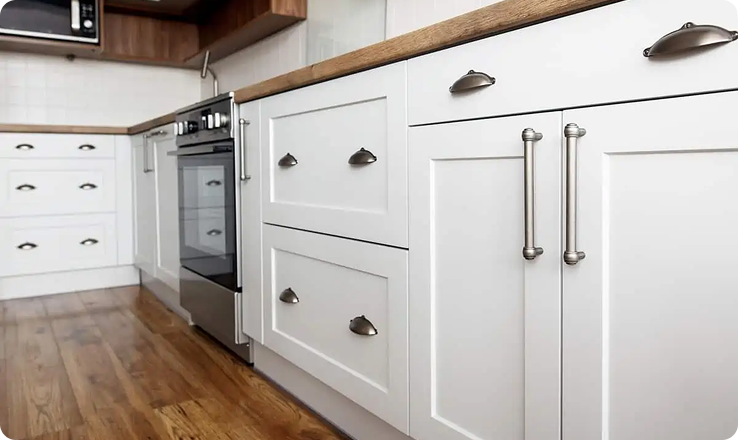
Yes, you can paint laminate cabinets and end up with a finish that looks crisp and modern. Laminate is smooth, so paint will not stick well unless you help it. A bonding primer made for slick surfaces creates grip, and cabinet-grade paint builds strength on top.
In Jacksonville, Florida and nearby areas, this is a cost-effective upgrade because you can change the look of the whole kitchen without the mess and cost of new cabinets. As experts in Northeast Florida cabinet finishes, A New Leaf Painting has seen many solid laminate cabinets that only needed the right prep and a fresh color to feel new again.
Common Misconceptions About Painting Laminate
Laminate gets a bad reputation because it does not absorb paint as wood does. That does not mean it cannot be painted. It just means the steps matter. If you plan to repaint laminate cabinets, watch out for these common myths:
- Believing that any paint will stick to laminate without a bonding primer
- Thinking a quick wipe is enough, even when grease is built up near handles
- Treating laminate like wood and sanding too hard
- Skipping small repairs when edges are lifting, or seams are swollen
- Rushing the job, then reinstalling doors before the finish cures
Steps Professionals Use To Paint Laminate Cabinets
A durable finish starts before the first coat of color. The process is easy to explain, but it needs consistency. Create a grip first, build a tough top layer, then let it cure. With over 20 years in the trade, good crews know that painting laminate effectively comes down to prep, product choice, and patience.
- Inspect Cabinets And Repair Damage. Check edges, corners, and seams. If the laminate is lifting, glue it back down so it lies flat. Fill chips and dents, then sand repairs smooth so they do not show through paint.
- Remove Hardware And Protect The Space. Take off knobs, pulls, hinges, and door bumpers. Label doors and drawers so everything goes back to the right opening. Cover floors, counters, and nearby walls so cleanup stays simple.
- Degrease Thoroughly And Rinse Clean. Cooking oils cling to cabinet faces, even when they look clean. Use a quality degreaser, then rinse with clean water and let everything dry. Recent job-site notes from A New Leaf Painting show many failures start when grease is missed around pulls or when cleaner residue is left behind.
- Scuff Sand Lightly And Remove Dust. You do not need to sand through the laminate. You only need to dull the shine so primer can bite. Use a fine sanding sponge or 180 to 220 grit paper, then vacuum well and wipe with a clean microfiber cloth.
- Prime And Paint In Thin, Even Coats. Apply a bonding primer made for glossy surfaces, then apply two thin coats of cabinet-grade paint. Thin coats level better and resist runs. In Northeast Florida, humidity, steady indoor cooling, and airflow help paint cure harder, which lowers the risk of a soft, sticky feel. Be gentle with doors for the first week, and avoid harsh cleaners until the finish fully hardens.
Choosing The Right Materials For Laminate
Laminate success is not about buying the priciest can on the shelf. It is about using products made for grip and daily wear. Coastal moisture and salty air can be hard on finishes, so smart choices matter in places like Jacksonville Beach and Ponte Vedra Beach.
Most clients say they want a finish that looks smooth, wipes clean, and does not chip the first time a pot bumps a door. That goal is realistic when each layer is chosen with laminate in mind. Choose a sheen that fits your space, since satin and semi-gloss are easier to wipe than flat paint. If you are unsure about color, test a small area or a spare door first, because kitchen lighting can shift tones.
Bonding Primer That Grips
A true bonding primer is a must on laminate. Professionals use labels that mention glossy surfaces, laminate, or cabinets. This primer is the bridge layer that locks onto the smooth door and gives your paint something solid to hold.
If the doors are very shiny, a liquid deglosser can help after cleaning and before primer. Still, it should support the primer, not replace it. Skipping the bonding primer is one of the fastest ways to get peeling at corners and pull areas.
Cabinet Paint That Cures Hard
Choose paint made for cabinets, trim, or doors. These coatings cure harder than standard wall paint and resist scuffs from fingernails, rings, and daily wiping. Waterborne acrylic-alkyd blends are popular because they level well and harden nicely over time.
If you are comparing the best paint for laminate cabinets, focus on scrub resistance and cure hardness. Also, check dry and recoat times on the label. Fast dry is nice, but a hard cure is what keeps doors from sticking during humid months.
Cleaners That Remove Kitchen Grease
Cleaning is not a quick spray-and-wipe step. You need a cleaner that cuts oils, then you need a rinse that removes cleaner residue. A kitchen degreaser or a TSP substitute often works well for this.
Give extra attention to the spots you touch the most. Drawer fronts, pull areas, and the cabinet above the range usually hold the most buildup. If the surface still feels slick after cleaning, rinse again and let it dry fully.
Sanding And Dust Control Supplies
Use fine abrasives, not coarse grit. Sanding sponges are easier on edges and profiles, and they help you avoid deep scratches that show through paint. The goal is a light scuff that dulls shine, not a rough surface.
Dust control matters as much as sanding. Vacuum with a brush attachment, then wipe with microfiber. Dust left behind can create a gritty feel and can weaken the bond under the primer.
Application Tools Professionals Rely On
A high-quality microfiber roller can lay down smoother paint than cheap rollers. A fine brush helps in corners and tight spots without leaving heavy marks. Spraying can create the most uniform, factory-style look, but it requires careful masking and a controlled setup.
Advice from industry experts is to ask how doors and drawers will be finished before the project starts. Some crews spray them in a protected area for a cleaner result. Others remove doors and spray offsite, then reinstall after curing. Either way, careful setup is what keeps dust and debris out of the finish.
How Long Does It Last When Done Right?
When laminate is cleaned, lightly scuffed, primed with a bonding primer, and finished with cabinet-grade paint, you can expect years of solid performance. Many painted cabinets still look good five to ten years later, especially when the finish is allowed to cure before heavy use.
Lifespan depends on moisture, heat, and how hard the kitchen works. Doors near the sink and trash pull-outs take the most hits. In Jacksonville, drier months like fall through early spring can be a great time for cabinet projects because coatings tend to cure faster when indoor humidity stays lower.
What To Expect From A Pro Finish
A professional finish looks even from door to door and feels smooth to the touch. Edges look clean, hardware sits flush, and doors close without sticking. The work area should stay neat, and you should always know what happens next. Simple care helps, too. Use mild soap and water, skip rough scrub pads, and wipe spills quickly around seams and corners.
If you are ready to move forward and still wonder whether to paint kitchen cabinets, schedule a consultation. You get clear updates during the work and a final walkthrough at the end. Trust is backed by an A+ BBB rating, multiple awards, and 750+ verified 5-star reviews. Your project is protected by clear warranties, including 2 years on one-coat jobs and 5 years on two-coat applications. To request an estimate, call 904-615-6599, email office@anewleafpainting.com, or visit https://www.anewleafpainting.com.