

Quick Answer
Jacksonville’s climate is one of the most demanding environments for exterior paint in the United States. Five specific conditions drive paint failure here: intense UV radiation from over 220 sunny days per year, year-round humidity that regularly reaches 70 to 90 percent, approximately 52 inches of annual rainfall concentrated in intense summer storms, salt air exposure in coastal communities, and seasonal temperature swings that cause surfaces to expand and contract.
Together, these conditions can cut a paint job’s lifespan roughly in half compared to cooler, drier climates — which is why paint product selection and professional preparation matter so much more here than in most of the country.
If you have lived in Jacksonville for any length of time, you have probably seen what happens to a home that was painted five or six years ago but already looks faded, chalky, or shows streaks of mildew running down the siding. That is not bad luck. That is Jacksonville’s climate doing exactly what it does to exterior paint — relentlessly and predictably.
Understanding why paint fails here is the first step toward making better decisions about what products to use, how often to repaint, and why the preparation work matters as much as the paint itself. It is also what separates a paint job that looks great for three years from one that still looks great at year twelve.
This guide breaks down each of the five major climate threats Jacksonville homes face, explains exactly what each one does to paint at a chemical and physical level, and gives you practical guidance on how to fight back.
Who wrote this: A New Leaf Painting has been painting homes in Jacksonville and Northeast Florida since 2003. We have completed more than 5,000 exterior projects in this market. What we know about how Jacksonville’s climate affects paint comes from two decades of watching real paint products perform — and fail — on real homes in this specific environment.
Jacksonville’s Climate: What You Are Actually Dealing With
Jacksonville sits in a humid subtropical climate zone — technically classified as Cfa on the Köppen climate scale, the same classification as cities like New Orleans and Savannah. That classification comes with a specific combination of conditions that are unusually punishing for exterior coatings.
A home in Minneapolis faces harsh winters but dry summers. A home in Phoenix faces intense heat but low humidity and minimal rain. Jacksonville combines the worst of several worlds: intense UV radiation, persistent moisture, heavy rain, and for coastal properties, constant salt air exposure. There is no season where your home’s exterior gets a break from at least some of these stressors.
Here is what that looks like in hard numbers:
|
Climate Factor |
Jacksonville Data |
National Average / Comparison |
|
Annual sunny days |
233 days |
205 days nationally; more than Chicago, New York, Seattle |
|
Annual rainfall |
~52 inches |
38 inches nationally; exceeds Atlanta, Denver, Los Angeles |
|
Summer relative humidity |
70–90%+ |
Among the highest in continental U.S. |
|
Average high in July |
92°F |
Sustained heat accelerates UV paint degradation |
|
UV Index (summer average) |
8–10 (Very High) |
Among highest in continental U.S. |
|
Coastal salt air exposure |
Yes (beach communities) |
Adds corrosive salt chemistry to all five threats above |
Put all of that together and you have an environment where exterior paint has to do far more work than it does in most of the country. The good news is that paint technology has kept up. Premium products engineered specifically for high-UV, high-humidity coastal environments can handle Jacksonville’s conditions very well — if the right products are used and the surface is properly prepared.
The 5 Biggest Climate Threats to Exterior Paint in Jacksonville
Each of these five factors damages exterior paint in a distinct way. Understanding the mechanism behind each one helps explain why certain products, preparation steps, and maintenance habits matter so much in this market.

Threat 1: Intense UV Radiation
Jacksonville receives over 233 sunny days per year — more than nearly any major city in the eastern United States. That sun is beautiful to live with, but ultraviolet radiation is the single biggest cause of exterior paint failure in Florida.
UV rays damage paint in two separate but related ways. First, they break down the pigment molecules in the paint — the components that give paint its color. As pigments degrade, colors fade. A rich navy becomes a washed-out gray-blue. A deep red turns salmon. This is purely visual at first, but it signals the beginning of a deeper problem.
Second, and more critically, UV radiation attacks the paint’s binder — the polymer network that holds the pigment together, gives the paint film its strength, and bonds it to the surface. As the binder degrades, the paint film becomes brittle and weak. This is what causes chalking (when binder breaks down and releases loose pigment powder), cracking, and eventually the complete loss of adhesion that produces peeling.
Which walls fail first: South-facing and west-facing walls receive the most direct sun on a Jacksonville home. South walls get intense midday sun year-round. West walls take the brutal afternoon heat from June through September. These elevations almost always show fading and wear first, and they are the best indicator of how the rest of the paint job is holding up.
Dark colors are disproportionately affected by UV damage. They absorb more solar energy than light colors, which both accelerates pigment breakdown and heats the surface significantly — sometimes to temperatures well above the ambient air temperature. That thermal load adds mechanical stress to an already UV-degraded paint film. If you use deep or saturated colors on a Jacksonville home, choosing a premium product with engineered UV-blocking technology (like Sherwin-Williams Emerald or Benjamin Moore Aura) is essential, not optional.
Threat 2: High Humidity and Persistent Moisture


Jacksonville’s humidity is relentless. Summer months regularly see relative humidity between 70 and 90 percent, and even the drier winter months rarely drop below 55 to 65 percent. That persistent moisture in the air creates a specific set of problems for exterior paint that are different from — and compound on top of — the UV damage described above.
Mildew and Biological Growth
High humidity creates ideal growing conditions for mildew, algae, and mold on exterior surfaces. You will see this most visibly on the north-facing and shaded sides of Jacksonville homes — the surfaces that stay damp longest after rain, dew, or irrigation overspray. Mildew growth shows up as dark green, gray, or black staining that spreads in patches across the siding.
This is not just cosmetic. Mildew secretes acids as part of its metabolic process. Those acids slowly break down paint film chemistry and, in cases of prolonged exposure, can begin degrading the substrate underneath — especially wood. Paint that lacks built-in mildewcide additives will show significant mildew staining within one to two seasons in Jacksonville’s conditions. Premium acrylic products contain active mildewcide compounds that inhibit this growth for the life of the coating.
Moisture Infiltration and Adhesion Failure
Beyond surface mildew, humidity contributes to paint failure through a less visible mechanism: moisture infiltration at microscopic cracks and pinholes in the paint film. As humidity cycles up and down, the paint film absorbs and releases moisture, causing it to expand and contract slightly. Over hundreds of these cycles across years of service, this fatigue weakens the bond between the paint film and the substrate.
When that bond weakens, the next heavy rain event pushes liquid water behind the paint rather than just surface moisture. That is when bubbling and peeling accelerate dramatically. Properly prepared surfaces with high-quality, moisture-resistant coatings handle these cycles far better than surfaces that were rushed or painted with inferior products.
High-risk spots for moisture damage: Shaded north-facing walls, areas around irrigation systems that spray onto siding, surfaces under dense tree canopy, and anywhere that drainage or downspouts send water across the wall surface. These are the areas to inspect most carefully and maintain most proactively on any Jacksonville home.
Threat 3: Heavy Rainfall and Storm Season
Jacksonville receives approximately 52 inches of rain per year — significantly above the national average of 38 inches. But the volume of rainfall is only part of the story. The delivery pattern matters just as much.
Unlike cities that get consistent moderate rainfall spread through the year, Jacksonville gets its rain concentrated in intense summer thunderstorms, often arriving fast and dropping one to two inches in under an hour. These events subject exterior surfaces to sudden, forceful water impact followed by rapid drying in the heat — a cycle that is particularly stressful for paint film.
Wind-Driven Rain and Penetration
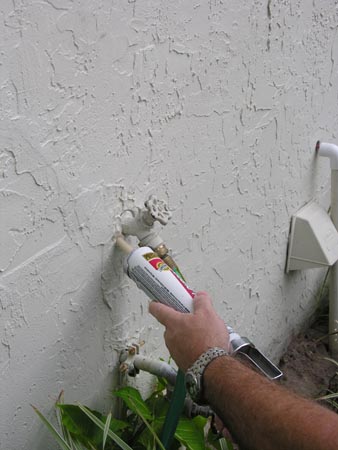
During strong thunderstorms and tropical weather events, wind drives rain horizontally against surfaces rather than falling straight down. This wind-driven rain can push water into places that normal rainfall would not reach: behind siding seams, through hairline cracks in stucco, under failing caulk edges, and around window and door frames where caulk has dried and shrunk. A paint job that would survive normal rainfall can fail quickly when wind-driven rain finds these entry points.
Storm Season and Hurricane Exposure
Jacksonville’s location in Northeast Florida puts it within range of tropical weather systems every year from June through November. A direct hit from a major hurricane is relatively rare, but tropical storms, tropical depressions, and the outer bands of offshore systems bring periods of sustained high winds and heavy rain multiple times each season. Every one of those events is a stress test on every exterior surface of every home in the area.
Homes with paint that is already aging — caulk that is cracking, sealant that has lost flexibility, paint film that has thinned — are particularly vulnerable. A paint job that might have lasted another year or two under normal conditions can fail suddenly during a significant storm event.
Post-storm inspection: After any significant tropical weather event, walk the full perimeter of your home and look for new areas of bubbling, delamination, cracked caulk, or exposed substrate. Catching storm-related damage early prevents small vulnerabilities from becoming major water intrusion problems over subsequent rain events.
Threat 4: Salt Air in Coastal Jacksonville Communities
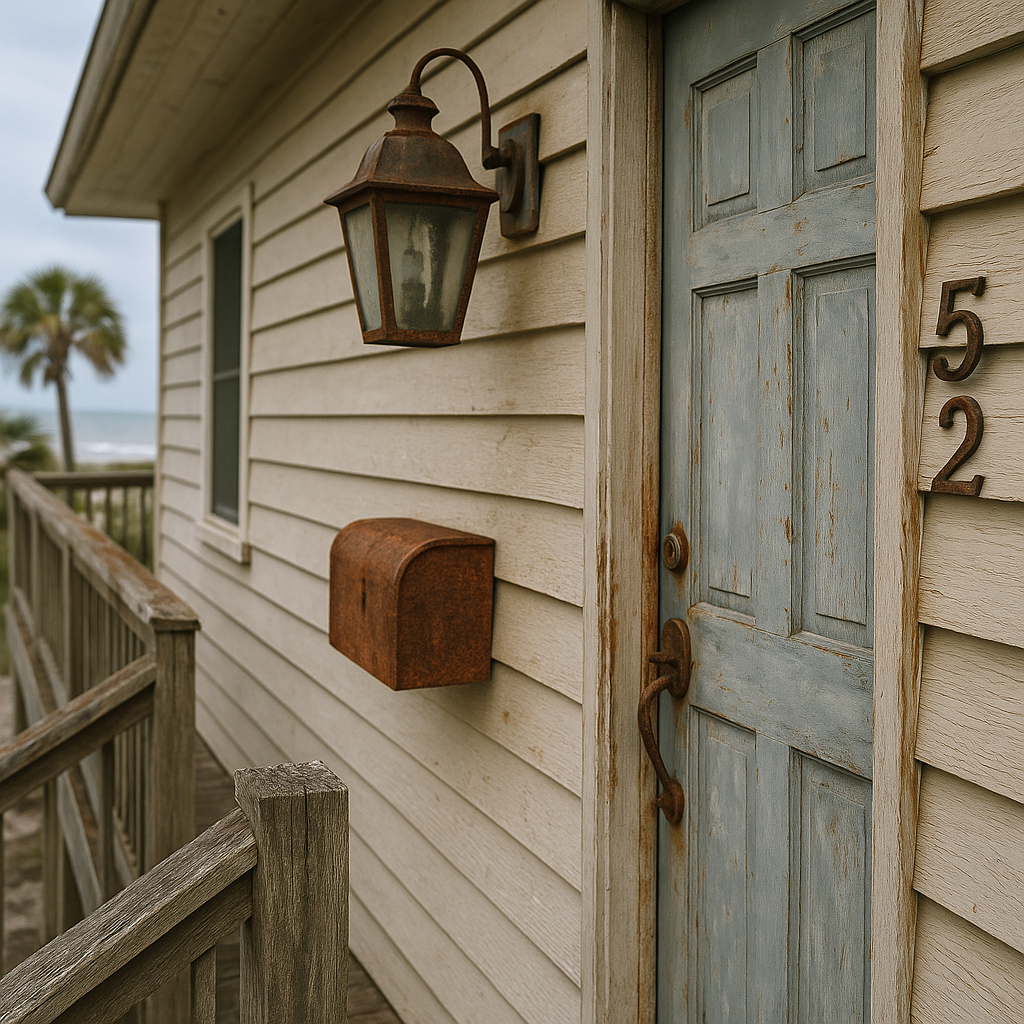
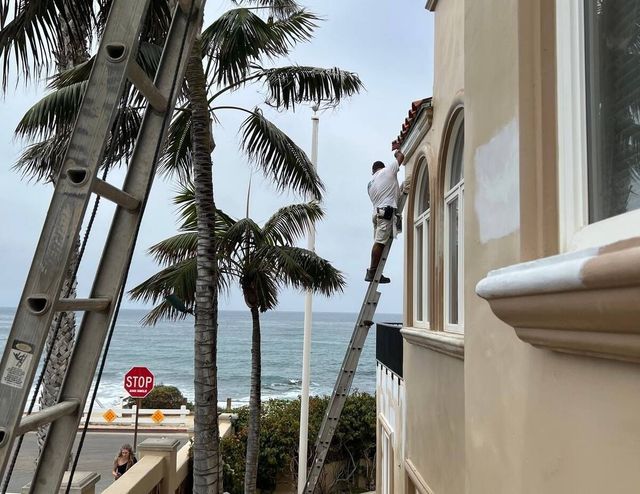
This threat is specific to homes in the coastal communities of Jacksonville and the surrounding area — but it is significant enough that it deserves its own dedicated section. Salt carried in the air from the Atlantic Ocean deposits on every exposed surface of a home near the water, and salt chemistry is genuinely corrosive to exterior coatings.
Which Communities Are Most Affected
The highest salt air exposure in the Jacksonville area occurs in the beach communities directly on or very close to the Atlantic coast:
- Jacksonville Beach
- Atlantic Beach
- Neptune Beach
- Ponte Vedra Beach
- Mayport and Fort George Island
Homes within roughly one to two miles of the ocean or Intracoastal Waterway receive meaningful salt air exposure year-round, with intensity increasing as you get closer to the water. Homes on oceanfront lots or with direct Atlantic exposure are in the most demanding environment.
What Salt Does to Paint
Salt air accelerates paint degradation through several mechanisms that compound on top of Jacksonville’s other climate threats. Salt is hygroscopic — it actively attracts and holds moisture against surfaces. This means salt-coated surfaces stay wet longer after rain and dew events, which increases the window of moisture exposure on the paint film.
Salt also directly attacks the chemistry of paint film over time, breaking down the molecular bonds in the binder faster than UV radiation alone would. On metal components — fasteners, railings, fixtures, window frames — salt promotes rust and oxidation that then bleeds through paint as orange or rust-colored staining.
The practical result: a coastal Jacksonville home with the same paint system as an inland home will typically need repainting one to three years sooner. Coastal homes require paint products specifically rated for marine or coastal environments, and they benefit most from annual soft-wash cleaning to remove salt deposits before they can do sustained damage.
For coastal homeowners: Regular soft-wash cleaning — ideally twice a year, once in spring and once in fall after storm season — removes salt accumulation before it can attack the paint chemistry. This simple maintenance step can meaningfully extend paint life on coastal Jacksonville homes.
Threat 5: Temperature Swings and Thermal Expansion
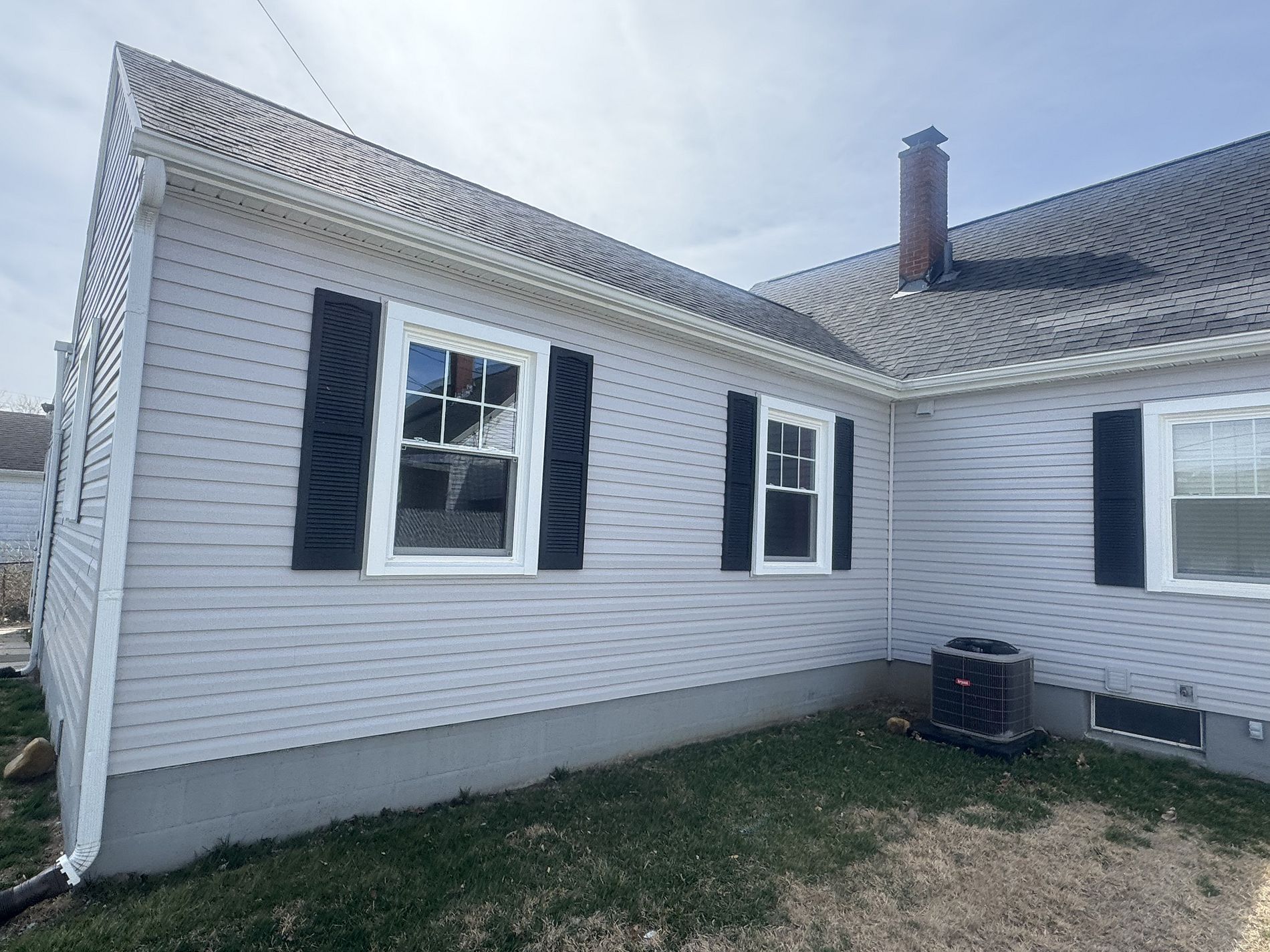
Jacksonville does not experience the freezing winters of northern states, but it does experience significant temperature swings across the year — and even within a single day. Summer highs routinely reach 92 to 96 degrees, sometimes higher with heat index values. Winter cold fronts can drop overnight lows into the 30s, and dark-colored surfaces on the west side of a home can reach surface temperatures well above 100 degrees on a sunny summer afternoon.
Why Thermal Movement Damages Paint
Every exterior material — wood, stucco, fiber cement, brick, metal trim — expands as it heats up and contracts as it cools down. This thermal movement happens every single day, hundreds of times over the life of a paint job. Paint has to be flexible enough to follow these movements without cracking or losing adhesion.
When paint is new, it is typically flexible enough to handle normal thermal movement. As it ages and UV radiation degrades the binder, the paint film becomes progressively more brittle. Eventually, it can no longer flex with the surface — and it cracks instead. Those cracks then become entry points for moisture infiltration, which is when thermal damage and moisture damage begin amplifying each other.
Stucco: The Most Vulnerable Material to Thermal Expansion in Jacksonville
Stucco — the most common exterior material on Jacksonville homes — is particularly vulnerable to thermal expansion damage because it is a relatively rigid masonry material. Over time, repeated thermal cycling causes hairline cracks to develop in the stucco surface itself, independent of the paint on top of it. These cracks are too small and too numerous to individually fill with caulk, but they are large enough for water to enter during heavy rain.
This is the core reason elastomeric coatings are the professional standard for stucco homes in Jacksonville. Standard acrylic paint cannot bridge these hairline cracks — it just paints over them. Elastomeric coatings are thick enough and flexible enough to stretch across those micro-cracks and maintain a continuous waterproof membrane across the entire stucco surface, even as thermal movement continues to occur.
How Long Does Exterior Paint Last in Jacksonville’s Climate?
Given everything above, here is what you can realistically expect from exterior paint in Jacksonville depending on surface type, paint quality, and location. These ranges assume professional preparation. Budget paint or skipped prep will cut these numbers significantly.
|
Surface |
Premium Paint (Inland) |
Premium Paint (Coastal) |
Budget Paint |
Key Driver |
|
Stucco |
8–12 yrs |
6–9 yrs |
3–5 yrs |
Elastomeric vs. acrylic |
|
Fiber Cement (Hardie Board) |
10–15 yrs |
8–11 yrs |
5–7 yrs |
Edge sealing; joint caulk |
|
Wood Siding |
7–10 yrs |
5–8 yrs |
3–5 yrs |
Primer quality; moisture |
|
Trim & Fascia |
5–8 yrs |
4–6 yrs |
3–4 yrs |
Finish type; UV exposure |
|
Brick / Masonry |
8–12 yrs |
6–9 yrs |
4–6 yrs |
Breathable coating |
The preparation multiplier: The single biggest gap in these ranges is not coastal vs. inland or brand A vs. brand B. It is preparation quality. A premium paint applied over a dirty, cracked, or unsealed surface will fail almost as fast as budget paint. Proper preparation — pressure washing, crack repair, caulking, priming, drying time — is what allows paint to reach the top end of these ranges.
Signs Your Jacksonville Home Needs Repainting
Many homeowners wait too long before repainting.
Here are common warning signs:
-
Fading or dull color
-
Peeling paint
-
Cracking or splitting
-
Mildew stains
-
Chalking (powder residue on your hand)
-
Exposed wood or siding
If you see these signs, your home may already be losing its protective barrier.
Warning Signs That Jacksonville’s Climate Has Damaged Your Paint
Your home’s exterior will show you when climate damage has reached the point where repainting is needed. Here are the most important signs to watch for — and what each one tells you about what is actually happening.
Fading and Washed-Out Color
Fading is the most visible early sign of UV damage. When the south- and west-facing walls of your home look noticeably lighter or more muted than the shaded north and east elevations, it tells you that the paint’s UV-blocking capacity has been largely used up. Color fading precedes more serious film degradation by a year or two — meaning visible fading is a good early warning that more significant problems are coming if you do not address them.
Chalky Residue on the Surface
Run your hand across the exterior wall. If it comes away with a powdery white or colored residue, that is called chalking — the physical sign that UV radiation has degraded the paint binder to the point where it can no longer hold the pigment particles in the film. Heavy chalking means the paint film is essentially dissolving. New paint applied over a heavily chalked surface without proper preparation will have nothing to bond to and will fail quickly.
Peeling, Bubbling, or Flaking Paint
Peeling and bubbling are signs that moisture has gotten behind the paint film and broken the bond between paint and substrate. In Jacksonville’s climate, this almost always means a combination of humidity cycling and liquid water infiltration — through a crack, a failed caulk joint, or an area where the paint film thinned to the point of failure during a storm event. This is the warning sign that demands the fastest response, because every rain event after this point is pushing more water into the substrate.
Do not wait on peeling paint: Once paint starts peeling, the underlying surface is getting wet with every rain. On wood, that leads directly to rot. On stucco, it causes moisture damage inside the masonry. The cost of addressing peeling paint early is always less than the cost of addressing the substrate damage that results from ignoring it.
Mildew and Algae Staining
Dark green, gray, or black staining — especially on shaded north-facing walls and under tree canopy — indicates that the paint’s mildewcide additives have been exhausted and biological growth is colonizing the surface. Surface mildew can sometimes be removed with a soft wash, but if it returns quickly after cleaning, or if it is widespread across multiple elevations, fresh paint with active mildewcide is the only lasting solution.
Cracking, Crazing, or Checking Patterns
A network of fine cracks in the paint — sometimes called crazing or checking — is the visual sign that the paint film has lost its flexibility from UV-induced binder degradation. The film can no longer flex with thermal expansion and contraction, so it cracks instead. These cracks are immediately available as water entry points. On stucco, you may see both cracks in the paint and hairline cracks in the stucco itself — which is the signal that elastomeric coating is needed on the next repaint.
Failing Caulk Around Windows, Doors, and Trim
Caulk is the front line of defense against water infiltration at every joint and penetration on your home’s exterior. Jacksonville’s UV, heat, and temperature cycling degrade caulk faster than in cooler climates. When caulk cracks, shrinks, or pulls away from the surface, it creates direct pathways for wind-driven rain to enter the wall structure. Failing caulk needs to be addressed promptly — and a full repaint should always include recaulking every joint and penetration on the exterior.
Annual check: Once a year — ideally in the fall after storm season — press your finger against the caulk around every window and door frame on your home. If it is hard, cracked, or pulling away anywhere, it is time to recaulk those areas regardless of the condition of the paint.
How to Fight Jacksonville’s Climate: Making Exterior Paint Last
Jacksonville’s climate is challenging, but it is not unbeatable. The right combination of product selection, thorough preparation, and ongoing maintenance can produce paint jobs that hold up for a decade or more even in Northeast Florida’s demanding conditions. Here is what actually makes the difference.
Choose Paint Products Engineered for Florida Conditions
Not all exterior paint is designed to handle the combination of UV radiation, humidity, mildew pressure, and moisture exposure that Jacksonville homes face. Budget or standard-grade products may perform reasonably well in milder climates, but they simply do not have the additive packages and binder technology that hold up here.
The products that consistently perform best on Jacksonville homes, in our 20-plus years of experience, are:
- Sherwin-Williams Emerald Exterior: Top-tier UV resistance and fade protection. The strongest overall performer for Jacksonville’s UV environment. Best choice when color retention over the long term is the priority.
- Sherwin-Williams Duration Exterior: Best mildew resistance in the Sherwin-Williams line. Excellent choice for homes with significant shade, north-facing elevations with mildew history, or properties near water.
- Benjamin Moore Aura Exterior: Industry-leading color lock technology. Best choice for deep or custom colors that need to stay vibrant in Florida’s UV environment.
- Benjamin Moore Regal Select Exterior: Premium mid-tier option. Strong adhesion on fiber cement and wood. Reliable performance across Jacksonville’s climate challenges.
- Elastomeric coatings (stucco): Not a standard paint — a thick, flexible coating that bridges hairline cracks in stucco and forms a continuous waterproof membrane. The professional standard for any stucco home in Jacksonville. Lasts three to five years longer than standard acrylic on masonry surfaces.
Invest in Professional Preparation — Every Time
The preparation that happens before any paint is applied is the single most important determinant of how long the paint job will last. You can use the best paint available, but it will fail early if it goes on a dirty, cracked, or damp surface. Here is what professional preparation looks like when it is done correctly:
- Pressure washing: Removes mildew, algae, salt, dirt, pollen, and chalky residue from the existing paint. The surface must fully dry — 24 to 48 hours in Jacksonville’s humidity — before any coating is applied.
- Scraping and sanding: Any area of peeling, bubbling, or flaking paint is removed down to stable substrate. Painting over loose paint guarantees early failure.
- Surface repairs: Cracks in stucco are filled with flexible patching caulk or compound. Rotted wood is replaced entirely. Damaged siding sections are fixed or replaced.
- Full recaulking: Every joint, window frame, door frame, utility penetration, and trim seam is recaulked with fresh, paintable, flexible caulk.
- Spot priming: Bare wood, fresh stucco patches, and any areas with rust or tannin staining are primed before topcoat.
- Two full coats: Applied at the manufacturer’s specified film thickness. One coat cannot provide the moisture and UV protection the product is designed to deliver.
Maintain Your Exterior Between Repaints
A few simple maintenance habits applied consistently between paint jobs can meaningfully extend the active life of each paint job — often by two to three years. Here is what actually works:
- Wash your home every one to two years: A soft-wash cleaning removes mildew, algae, pollen, and salt accumulation before it can chemically attack the paint. This is the single highest-value maintenance habit for Jacksonville homes.
- Inspect and touch up caulk every three to five years: Check every joint and seam. Replace any caulk that is cracked, hard, or pulling away from the surface.
- Keep vegetation trimmed back from exterior walls: Shrubs and vines in contact with walls trap moisture, prevent drying, and can physically abrade the paint surface. Keep everything at least twelve inches back.
- Clean out gutters regularly: Clogged gutters overflow onto fascia and siding, keeping those surfaces wet for extended periods and accelerating paint failure at the roofline.
- Address small failures immediately: A small peeling area or failed caulk joint fixed immediately is a thirty-minute touch-up. The same spot ignored through another storm season becomes a substrate repair.
- Rinse after storms: Particularly for coastal or near-coastal homes, a gentle hose rinse after a major storm event washes away salt deposits before they can begin attacking the paint film.
How Often Should You Paint Your Home in Jacksonville, Florida
Coastal vs. Inland Jacksonville: How Location Changes Your Paint Strategy
Not all Jacksonville homes face the same climate challenges. Your home’s specific location within Northeast Florida significantly affects how aggressively you need to approach paint selection, maintenance, and repaint scheduling.
|
Factor |
Coastal Communities |
Inland Communities |
|
Salt air exposure |
Significant — year-round airborne salt deposits |
Minimal to none |
|
UV intensity |
High (same as inland + reflective water surface) |
High |
|
Wind exposure |
Higher — stronger storms and sea breeze |
Moderate |
|
Expected paint lifespan |
Subtract 2–3 years from inland ranges |
Full lifespan ranges apply |
|
Paint recommendation |
Marine/coastal-rated products; more frequent inspection |
Premium acrylic; standard schedule |
|
Maintenance frequency |
Soft wash 2x per year (spring + fall) |
Soft wash every 1–2 years |
|
Repaint schedule |
Every 5–9 years (surface dependent) |
Every 7–15 years (surface dependent) |
Coastal communities with the highest paint exposure include Jacksonville Beach, Atlantic Beach, Neptune Beach, Ponte Vedra Beach, Mayport, and Fort George Island. The further from the water, the more the inland ranges apply. As a general rule of thumb: homes within a mile of the ocean or Intracoastal should plan maintenance and repainting on the shorter end of all ranges.
Frequently Asked Questions: Jacksonville’s Climate and Exterior Paint
These are the questions Jacksonville homeowners ask us most often about how the local climate affects exterior paint. Each answer is written to be directly useful whether you are reading this guide or asking a voice assistant or AI tool.
Why does exterior paint fail faster in Jacksonville than in other cities?
Exterior paint fails faster in Jacksonville than in most U.S. cities because of a combination of five overlapping climate threats: over 233 sunny days per year producing intense UV radiation that degrades both pigment and paint binder; year-round humidity regularly reaching 70 to 90 percent that promotes mildew growth and moisture infiltration; approximately 52 inches of annual rainfall concentrated in intense summer storms; airborne salt exposure in coastal communities; and seasonal temperature swings that cause surfaces to expand and contract. No single factor alone would be unusual, but the combination is unusually demanding for exterior coatings.
Does Florida humidity damage exterior paint?
Yes. Jacksonville’s high humidity damages exterior paint in two primary ways. First, it creates ideal conditions for mildew and algae growth, which colonize the paint surface and secrete acids that break down the coating. Second, humidity cycling causes the paint film to absorb and release moisture repeatedly over time, eventually fatiguing the adhesion bond between paint and substrate. Paint formulated with mildewcide additives and strong moisture resistance — like the premium acrylic products from Sherwin-Williams and Benjamin Moore — handles Jacksonville’s humidity significantly better than standard exterior paint.
Does UV sun exposure damage exterior paint in Jacksonville?
Yes, and it is the single biggest cause of paint failure in Jacksonville. UV radiation breaks down the pigment molecules that give paint its color (causing fading) and degrades the paint binder that holds the film together (causing chalking, cracking, and peeling). Jacksonville’s 233+ sunny days per year and high UV index make this degradation faster than in cloudier or more northerly cities. South- and west-facing walls show UV damage first. Premium acrylic paints engineered for Florida’s UV environment — like Sherwin-Williams Emerald and Benjamin Moore Aura — contain UV-absorbing compounds that significantly slow this process.
Does living near the beach affect how long exterior paint lasts in Jacksonville?
Yes, significantly. Homes in coastal Jacksonville communities — Jacksonville Beach, Atlantic Beach, Neptune Beach, and Ponte Vedra Beach — are exposed to airborne salt from the ocean year-round. Salt is corrosive to paint film chemistry, attracts and holds moisture against surfaces, and promotes rust on metal components. Coastal homes typically need repainting one to three years sooner than comparable inland homes using the same paint system. Annual soft-wash cleaning to remove salt deposits, and paint products specifically rated for marine or coastal environments, are important for extending paint life on coastal Jacksonville properties.
What is the best exterior paint for Jacksonville’s climate?
The best exterior paints for Jacksonville’s climate are premium acrylic latex products specifically engineered for high-UV and high-humidity environments. The top-performing products for Jacksonville conditions are Sherwin-Williams Emerald Exterior (best UV and fade resistance), Sherwin-Williams Duration Exterior (best mildew resistance), Benjamin Moore Aura Exterior (best color retention for deep colors), and Benjamin Moore Regal Select Exterior (premium mid-tier performance). For stucco homes, which are the most common exterior type in Jacksonville, elastomeric coatings are the professional standard because they bridge hairline cracks and form a continuous waterproof membrane.
How often should you repaint a house in Jacksonville because of the climate?
In Jacksonville, most homes need exterior repainting every 8 to 12 years for stucco with premium paint, 10 to 15 years for fiber cement, and 7 to 10 years for wood siding — all assuming professional preparation. With budget paint or minimal preparation, those ranges shrink to 3 to 5 years. Coastal homes near the Atlantic or Intracoastal should subtract two to three years from those ranges due to salt air exposure. The climate factors described in this guide are exactly why preparation quality and paint product selection matter so much more in Jacksonville than they do in most of the country.
What can I do to make my exterior paint last longer in Jacksonville’s weather?
The most effective steps to extend exterior paint life in Jacksonville are: use a premium acrylic latex product specifically formulated for high-UV and high-humidity conditions; invest in thorough professional preparation including pressure washing, caulking, crack repair, and full drying time; wash your home’s exterior every one to two years to remove mildew and salt accumulation; inspect and replace failing caulk every three to five years; keep vegetation trimmed back from exterior walls; address small areas of paint failure immediately before they spread; and rinse your home after major storm events if you are in a coastal area.
Do I need elastomeric coating for my Jacksonville home?
Elastomeric coating is specifically recommended for stucco homes in Jacksonville — which represents the majority of the housing stock in Northeast Florida. Stucco develops hairline cracks from the thermal expansion and contraction described in this guide. Standard acrylic paint cannot bridge those cracks, leaving them as water infiltration points. Elastomeric coatings are thick and flexible enough to stretch across hairline cracks and form a continuous waterproof barrier across the stucco surface. For wood or fiber cement siding, standard premium acrylic latex is the correct product.
About A New Leaf Painting — Jacksonville’s Exterior Painting Specialists
A New Leaf Painting has been painting homes in Jacksonville and throughout Northeast Florida since 2003. We have completed more than 5,000 exterior residential painting projects in Jacksonville, Jacksonville Beach, Atlantic Beach, Neptune Beach, Ponte Vedra Beach, Fleming Island, Orange Park, and the surrounding communities.
Everything in this guide reflects what we have learned from two decades of watching exterior paint perform — and fail — on real homes in Jacksonville’s specific climate. We know which surfaces fail first on a coastal home versus an inland home. We know which products hold their color through multiple Florida summers. We know exactly what happens when preparation is rushed versus done thoroughly. That firsthand knowledge is what we bring to every project.
We hold all required Florida contractor licenses, carry full liability insurance and workers compensation coverage, and back every project with a written warranty on both workmanship and materials.
What Jacksonville Homeowners Get With A New Leaf Painting
- Free, no-obligation exterior painting estimates and honest condition assessments
- Climate-specific expertise: we know what Jacksonville’s UV, humidity, and coastal conditions do to every surface type
- Full professional preparation — pressure washing, repairs, caulking, priming — never skipped
- Premium paint systems from Sherwin-Williams and Benjamin Moore matched to your surface, location, and exposure level
- Elastomeric coating expertise for Jacksonville’s stucco-heavy housing stock
- Two-coat application with material records provided at project completion
- Workmanship and material warranty on every project
- Hundreds of verified five-star reviews from homeowners across Jacksonville and Northeast Florida
Has Jacksonville’s Climate Been Hard on Your Home’s Exterior?
Call or text 904-615-6599 for a free exterior inspection and honest assessment of how much exterior painting cost.
We will tell you exactly what the weather has done to your paint, what needs to be addressed, and what the right solution looks like for your home.
Serving Jacksonville • Jacksonville Beach • Ponte Vedra • Atlantic Beach • Neptune Beach • Orange Park • Fleming Island


